Showing posts with label review. Show all posts

Sunday, November 10, 2019

The Outer Worlds

https://cdn.vox-cdn.com/thumbor/QiNbi4kf54LOB5yjB5SVAEgVS54=/1400x1400/filters:format(png)/cdn.vox-cdn.com/uploads/chorus_asset/file/19295524/The_Outer_Worlds_art_cover.png

I first took notice of The Outer Worlds when the first trailer was released last December. This new first-person sandbox RPG developed by Obsidian Entertainment piqued my interest with a trailer that looked energetic and fun in a way that Obsidian games had not yet been. My familiarity with Obsidian came from Fallout: New Vegas, and the infusion of frenetic tension with their proven aptitude for scope and storytelling looked promising.

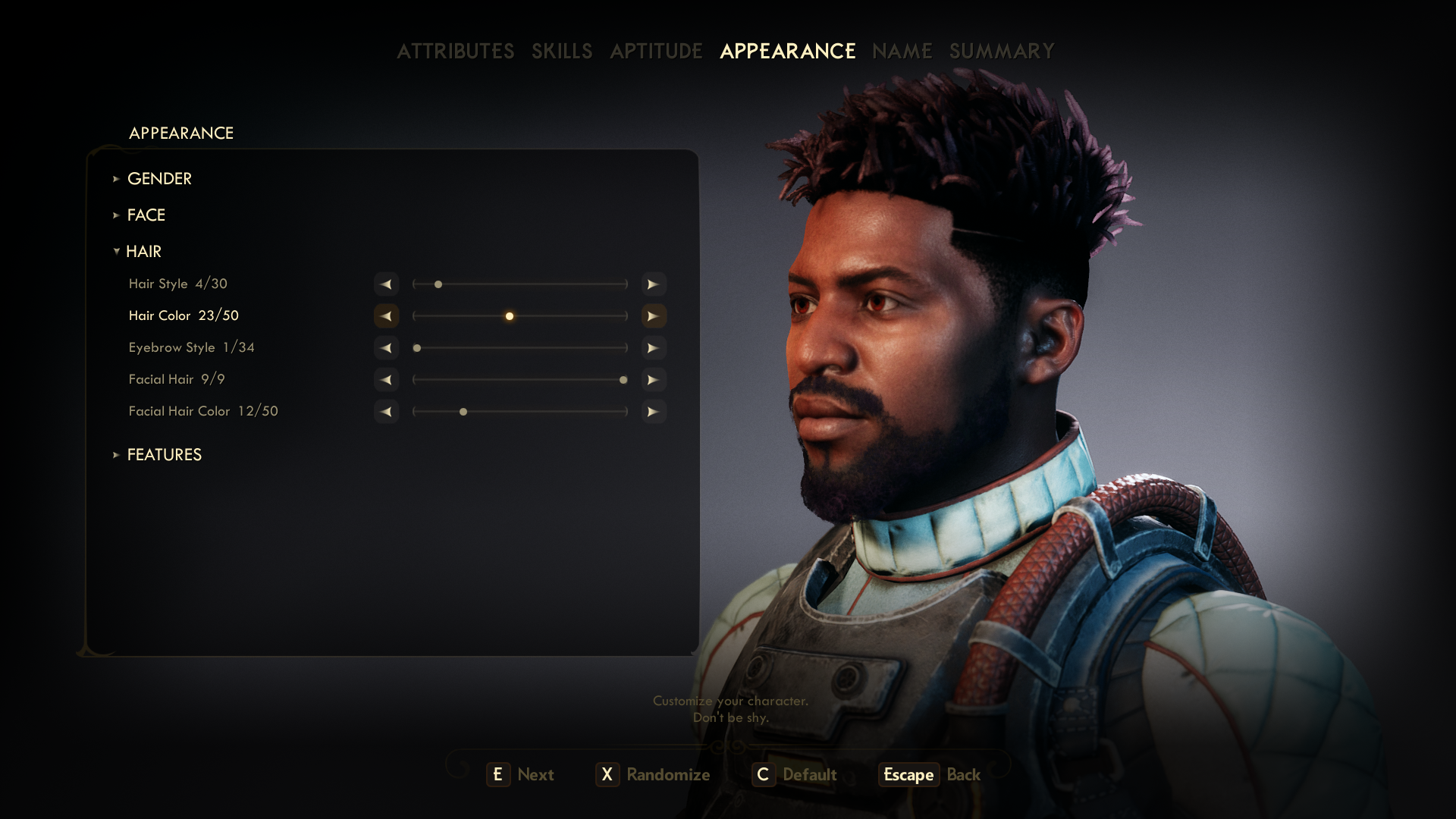
Fast forward to when the game released and I queued up a video to see what it was like. I was taken in first and foremost by the character creation mechanic, but soon after by the story and narrative structure that seemed familiar yet flavorful. It immediately felt like I knew the recipe so well that I was compelled to take my turn in the kitchen and I bought the game without much preamble.

Having now spent my time with the game, I've found that it is a mashup of successful elements from other games. In fact, as I broke the game down into bite-sized pieces, I've found allegories to help me describe each of them.
https://video-images.vice.com/_uncategorized/1571776929816-unknown-6.png
Gameplay: While a class war rages on in Fallout 76 following the release of premium subscriptions, let's ignore that dumpster fire to talk about The Outer Worlds. Fallout is the dominant flavor in The Outer Worlds. The sequences of questing, combat, and looting are nearly identical to any Bethesda RPG. As a result, the game feels like the Fallout sequel that 76 wasn't. When many gamers look at The Outer Worlds, Fallout is what they see.

The comparison between Fallout and The Outer Worlds is easy: visually and narratively the games have some similarities, but in terms of gameplay The Outer Worlds follows Fallout step-for-step. Questing takes place in story hubs, typically settlements or groups of NPCs, and that is where the narrative is driven forward. Combat invites a variety of strategies and the game's "sandbox" style allows the player to choose how to engage enemies. Looting directly or indirectly improves the player's combat ability and draws the player out into the "sandbox" before looping them back through a story hub. This is the basic flow of any Bethesda RPG, and it's the same in The Outer Worlds except that where Bethesda RPGs provide huge and vibrant worlds to explore to the point that you can forget your quests altogether, Obsidian designed The Outer Worlds without that scope. Clear, direct paths dominate your map and moving away from them slows your progress with simple-minded enemies who offer little to no reward. As you clear these enemies for the hell of it, suddenly you find your game world feeling empty.

As a result, the player is disappointed to find themselves corralled and railroaded from point-to-point. The quest selection is too few and the story hubs feel like they have more closed doors than open ones. Ultimately, when the game is done you don't feel like you've had the Bethesda RPG experience--you feel like the game is far smaller than you had been led to believe. From high hopes at the beginning, The Outer Worlds disappoints as the story and narrative turn linear more in the style of Mass Effect. As you clear your quest log, you find that apart from a smattering of side quests offering pointless rewards, a quest for each companion, and the main story quest, there isn't really all that much to do. The Outer Worlds is less of a "sandbox" and more of a scavenger hunt--every location serves a purpose and, once that's done, you never need to go back.

To sum it up, The Outer Worlds starts by opening up and showing you such a wide array of possibilities for play style, for locations, for enemies, and so on that you get drawn in. Before long, however, you find that the game has run out of new things to show you. Your Assault Rifle gets replaced by an "Assault Rifle II", you don't get any new visuals or interactions. Not at all unlike the marketing strategies of corporations which the game satires, The Outer Worlds sells you on an incomplete experience ripe for monetization by DLC expansions in the future.
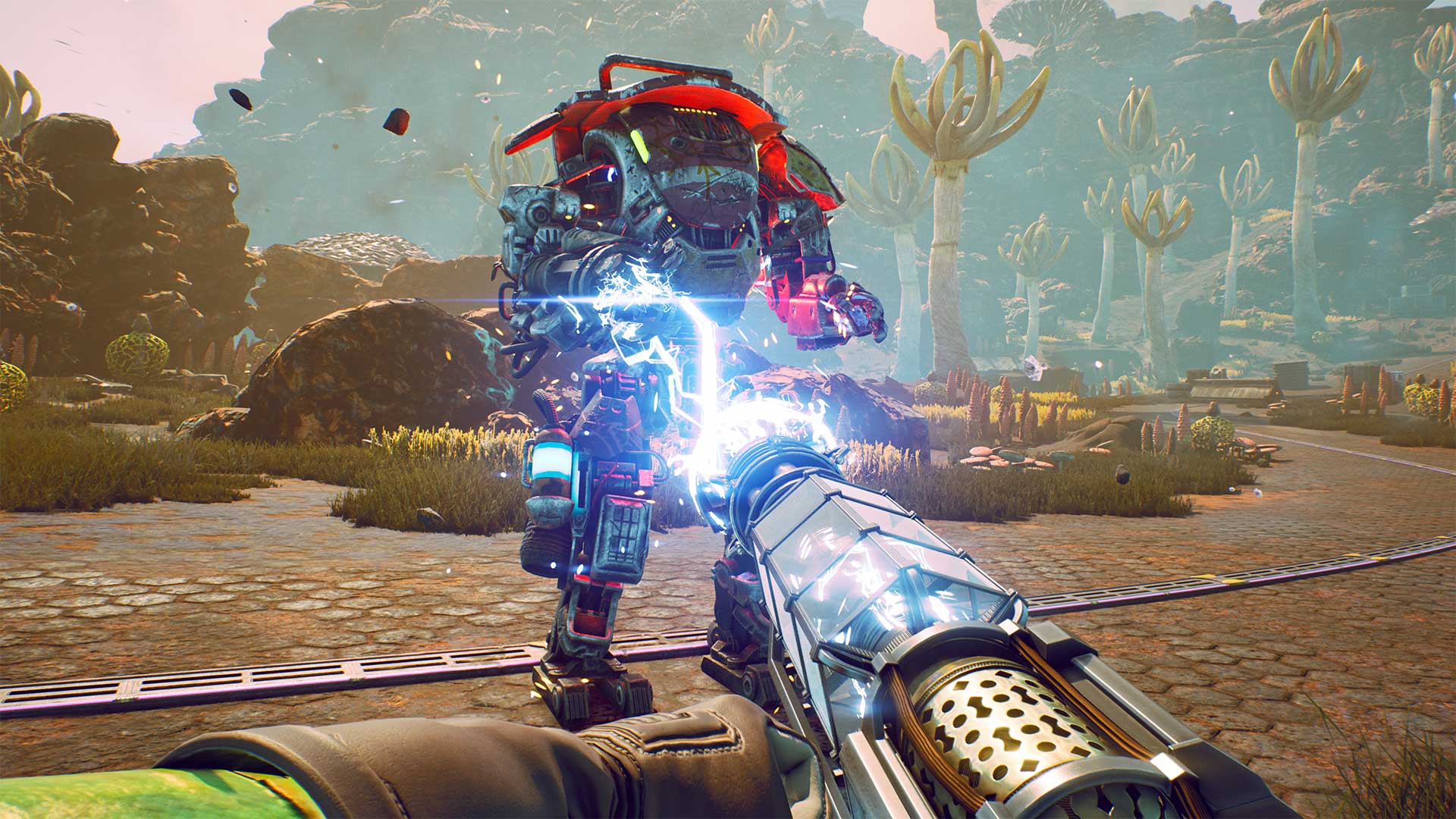
https://d1079ywfijtdjs.cloudfront.net/images/outerworlds/v2/video/poster/weapon-variants-1920.jpg

Visual Effects/Art Style: The visual elements of The Outer Worlds are stylized in a way that's reminiscent of Borderlands. There is further congruence in the role that corporations play in the game world. Lootable items are highlighted in a blue outline that leads the player to ignore other elements of the game world and makes it hard to perceive the details of the things you are looting. When you make a point of looking at the scenery, it seems like there was more attention to details than attention to the overall appearance. Individually, visual components are unique and interesting, but altogether they don't stand out from one another and they don't particularly feel like they fit into their settings. The environments feel like they were built-to-suit a linear and singular purpose leaving few paths for traversing and little reward for exploring. While the grass may look good to a pixel, it loses any appeal when it's the same textures over and over. The world doesn't feel lived-in, it feels manufactured and not in the satire-of-a-corporate-world kind of way. The artists did their job, sure, but the game ends up looking like it was built to a deadline and a budget.


Sound Effects/Music: I'm not sure if the soundtrack for The Outer Worlds was made before or after the rest of the game, but it doesn't connect to the experience. It offers a sense of wonder, space, and intrigue that the game itself utterly lacks. The soundtrack is good, but not fitting for this game. Can you imagine if the main menu theme was the introduction to an episode of Rick and Morty? Yeah, it's like that.

The voice acting is a bright spot that brings the various characters to life in a way the game does not. Milquetoast archetypes are livened by the acting and this makes for one of the best parts of the game. For the characters you spend time with, this feels right. For characters who only pop up a few times along the way, it's a bit jarring. On the one hand, you want to give time and attention to this part of the game and on the other hand you're hoping to find more narrative than most of these conversations ultimately offer you. This leaves you torn between slowing your progress and hunting for the experience you were promised. I'll spoil that search for you: take your time with the characters.


Story and Narrative: I've already mentioned the broad aspects of the story and narrative in the gameplay section, so I want to keep this short. The Outer Worlds lends itself to comparisons with Rick & Morty, Firefly, and Mass Effect. There's a crazy scientist on the run, a Robin Hood-esque captain trying to do a bit of good in a corporate galaxy, and a team of needy companions asking for someone to fix their dysfunctions. The story opens up after a few hours and the player is encouraged to find and complete quests at their own discretion, but this is only one layer deep. Completing quests means that the area they sent you to is now empty. The characters you helped lose interest in you, and as you complete hubs, you find that you have no reason to go back. The planets and towns aren't destinations and they aren't places you go to explore the game--and, for that matter, neither are the parts outside of the story hubs. The game is at its most memorable when it is also at its most linear. The "sandbox" in The Outer Worlds is the worst part of the experience and very likely one of the biggest reasons you would buy a Fallout-esque game by Obsidian Software. The linear sections seem to have been given more time and attention in development, but they don't last. It's like the game they wanted to make was too small, so they stuffed it with flavorless sandbox elements.

The Outer Worlds doesn't offer satisfaction like Skyrim does. Look at how a challenging quest made a moment for this Redditor:
Oh my god, I finally did it. After all this time. from r/skyrim
The Outer Worlds doesn't invite you to live in the world. When you go for a sandbox game, you want to act and think like you are really there like Fallout 4 did for this Redditor:

After spending countless hours perfecting a single settlement in FO4, I can't help but take offense when my settlers complain about "hard times" or how hungry they are. They live in a fucking resort compared to the rest of the Wasteland. from r/Fallout


https://media.comicbook.com/2019/02/the-outer-worlds-obsidian-microsoft-1160630-1280x0.jpeg
Entertainment Value:  With all of the remakes and remasters around today, The Outer Worlds doesn't suffer for being familiar. Mechanics and playstyles are easy to understand making the game easy to pick up and play. From the start, you'll feel like you're in control and although the game does expect you to figure out a lot of things by the time you gain your first level, you are helped by these things being similar to things other games you've played. This leaves The Outer Worlds difficult for new gamers and without a hook in the gameplay to keep old gamers.

The Outer Worlds starts well and finishes poor. Early on, the story and the world and the rapidly expanding options are enough to keep you excited to play. As the game wears on, the familiar and the repetitive aspects lose their luster. You are no longer finding new and interesting places to explore, you're just traversing as little as possible between fast travel points and skipping through dialog as you hunt for something to enjoy.

When I finished the game, I had no desire to keep playing. I wasn't interested in going back to try the other choices I could have made along the way. I felt like I had gotten the best experience the game had to offer for me. After a week of this, I did go back to try again to test those feelings. There is no new game plus, so from a new start I found myself rushing through the main story. I wasn't stopping to enjoy any part of the game. I now knew where to find everything, I knew that if there was a dialog option related to a skill I would choose it without reading, I knew that if I ran just far enough out of combat the whole area would reset sans whichever few enemies I had picked off the first time... In other words, I had solved the challenges. In a few minutes and on a higher difficulty, I had made more progress than I made in two hours on my first playthrough. The only thing to do was to rush along to major plot points, change the outcome, and then rush onto the next so that I could see two different sentences about my actions by the games' end.

In short, the game is entertaining once. You should wait to play this game. If they build the world up with DLC, that's a sign that you should wait longer. There is value in The Outer Worlds, there are brilliant moments and fun to be had, but it's nowhere close to worth it's price. Go play anything else and don't buy in until this game has more to offer.

https://godhatesgeeks.com/wp-content/uploads/2019/06/maxresdefault-1.jpg

Conclusion: 
The Outer Worlds feels familiar, but lacks it's own identity. The Outer Worlds fails to make a strong impression on the future of gaming, instead choosing to live in the past. There's nothing in the game that's on the cutting edge of game design or technology, and that makes it the sort of game you can put on your wishlist for awhile and wait for a deal. Don't hurry to play this game, find it in your own time or not at all--at this point it doesn't matter. If more is added to this game in the future, then it only moves itself closer to being worth your time rather than adding value to a complete product.

Wednesday, December 26, 2018

Should you try Kingdom Come: Deliverance?


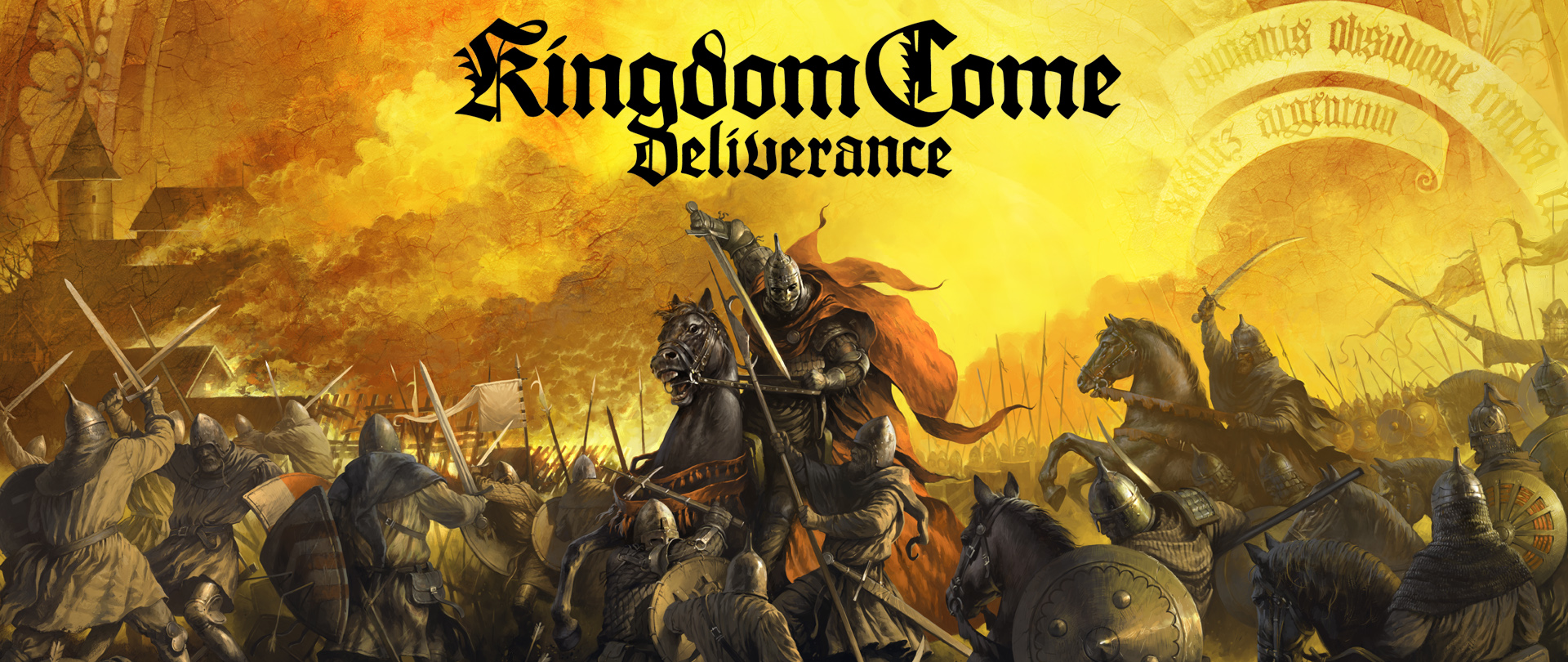
Picture Source: https://www.deepsilver.com/wp-content/uploads/sites/3/2016/11/bg_image_kcd.jpg
Kingdom Come: Deliverance is an action RPG released in February of 2018 for PC, PS4, and Xbox One. This is the only game developed to date by Warhorse Studios from Prague, Czech Republic. I first came across this game while hunting for games on Steam that were similar to Bethesda RPGs. Beta testers' reviews were mixed between loving the ambition and complaining about the bugs. While I remained cautious, I recognized these complaints as some that often come with Bethesda RPG-esque titles. I followed up with some research about the game and it held my interest. Even so, I waited until the game had received a few patches before deciding to give it a go.

I'll say that my patience was rewarded. While bugs and glitches remain an issue for the game, I found myself immersed and enjoying what Kingdom Come: Deliverance had to offer. I found that the game had really great qualities but that these came conditionally. To explain, I've made a list of the three things that are absolutely required to enjoy this game:
  1. You should be interested in playing a historical, sandbox-style game.
  2. You should be able to commit to long play-sessions with the game.
  3. You should know that this game will thoroughly test your patience.
Now, if the above doesn't seem too difficult for you, read on and you might find out that Kingdom Come: Deliverance is a game you would love to play.

1.  Be interested in an historical, sandbox-style game

Picture Source: PC Gamer article "Kingdom Come: Deliverance release date revealed, along with new trailer" https://www.pcgamer.com/kingdom-come-deliverance-release-date-revealed-along-with-new-trailer/


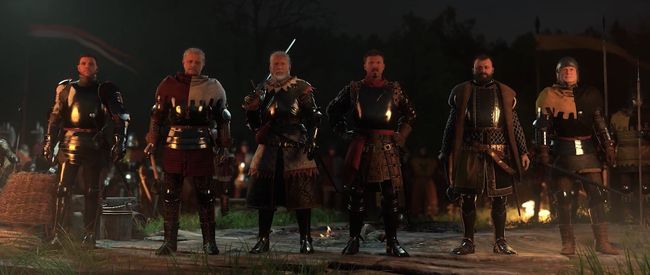
As I said in an earlier post, a Bethesda RPG comes down to three qualities which, when done well, provide an experience like Elder Scrolls or Fallout. Those qualities are the immersive world, the quality sound design, and the player-driven narrative. Kingdom Come: Deliverance delivers a Bethesda RPG-esque experience in all three categories.

Kingdom Come: Deliverance takes place in Bohemia in the year 1403. This 15th century setting puts the player at the beginning of the Hussite movement, near the end of the reign of Wenceslas IV, and during a period of papal schism in the Holy Roman Empire. All of these elements come into play in the story, and shape the world of KC:D. Without any foreknowledge of these events, KC:D provides a historical perspective that engages the player more deeply than a textbook.

This historical setting means the game lacks certain fictional elements common in other games of the genre (i.e. magic, deific influences). The Christian religion of that time has it's role to play in the story and the game-world overall and, while it's understandable that this would be off-putting to some players, I found this to be an immersive element that connected the world to an even longer history. Moreover, religion in KC:D is responsible in part for developing characters' personalities as it influences their actions and their language.

Picture Source: "How Big Is Kingdom Come: Deliverance's Map?",  https://www.shacknews.com/article/103324/how-big-is-kingdom-come-deliverances-map

The characters in KC:D both fictional and historical contribute to a world that feels deep and personal. The characters act and speak with historical aspect; a shout in Old Hungarian let's you know that a foreign foe has found you, or a bit of Latin clues you in that a character is educated. This not only solidifies a character's place in the world, it also engages the player with their protagonist's position in all of this turmoil.

Unlike other games of this type, the player is not given choices for character creation and this leads the game to tell a more linear story. As a result, the game exerts greater control over how the player advances their position in the world and doing so comes as a result of playing the main story. This gives the main quests a necessary edge in rewards over side quests. Playing through the main story makes side quests more accessible, and that is a great dynamic to create for a game where exploration can consume hours of playtime. The downside comes at several points in the game where the player is warned that continuing the main story will result in the failure of side quests which stand to become obsolete. So while KC:D benefits from character-driven elements in a player-driven narrative, the range of available quests suffers a bit for it. The best solution is to seek balance--don't be afraid to miss some quests, but don't push on too quickly past them either. I found myself stopping when I reached one of these thresholds and assessing the options in my questlog before deciding how I wanted to proceed.

A lot can be said for a game where making progress in quests isn't the only way you want to play it. Kingdom Come: Deliverance has a lot to offer purely as a sandbox playground. In particular, this is the area where the sound design shines through. Exploring on horseback through the wilderness and the towns provide some of the best interactions between the player and the environment. The peaceful nature sounds of the forest, the period music of medieval instruments, and the snippets of conversation between NPCs create an endearing and immersive ambiance. The presence of multiple languages and characters of varying nobility provides a breadth of experience in the voice acting alone.

Here's a short clip I made in the game where I call my horse. Notice how the game creates a mood using the music and the ambiance:


2. Be able to commit to long sessions of play

Picture Source: '‘Kingdom Come: Deliverance’ Preview Accolades Teaser & Gameplay Videos'  https://www.geeksofdoom.com/2018/01/10/kingdom-come-preview-accolades


If you're hoping to make meaningful progress in Kingdom Come: Deliverance, you should plan to play for at least an hour. Playing for less than that is a detriment to your experience of the game. KC:D isn't paced to suit gamers who can spare it fifteen to thirty minutes at a time. For one thing, the game is stingy about save points--you can only create a save by exiting the game or by using an item in the game (called "Saviour Schnapps"). Since the game's initial release, the ability to save upon exiting the game as well as some auto-saves have been added. While this has defeated one of the more "hardcore" gaming elements of the game, it does help gamers who can't play for multiple hours in one sitting. Even still, KC:D is best played when you can give it more than an hour of your time.

Combat is a good example of why the game doesn't work for short sessions. Running across a single camp of bandits can result in around ten minutes of combat. When you run into this and you only have a short time to play, it means you won't get to make any progress towards your goal. If all you get out of a play session is one prolonged interruption, you won't get to have a good time with this game and you'll put it down before you get the value out of it. Combat is not only vital to training your skills, it's also your primary source of better gear and income. Grinding out those long interruptions is to your benefit, but when time is short you won't have a good time learning and progressing this way.

The nature of many quests in KC:D is such that if you're willing to take more time with them you can get a better result. Quests include "optional" extras, like providing a military camp with meat (that you'll probably have to poach illegally, if you should so choose) and these "optional" branches take more time. Completing these extra parts is a fun and satisfying part of the immersive experience of the game, but when you're budgeting by the minute you won't be compelled to complete them and your enjoyment will suffer for it.

Kingdom Come: Deliverance gives you a wide open sandbox. You won't be restricted by level or gear requirements and so you can spend your time by simply exploring the world. There are "interesting sites" to be found all over as you explore, and treasure maps to give you an objective while you do so. You'll have to make the trek yourself until you can come by a horse, and even then you can expect to climb over every hill and through every dale in your hunt for riches. Moreover, you can expect to find more than a few other folks out in those woods looking for their own quick profit.

But beware, if you let yourself get caught up with exploring you'll run into problems keeping yourself fed, awake, clean, and punctual. Yes, punctual. If you're asked to find someone who will be around for two days, you can expect to fail your quest if you don't find them before then. The same is true for battles--if you're lord tells you to be there and you shirk your duty, you can expect that battle to happen without you. Along your way, you'll need to keep unspoiled food and find places to sleep and bathe.

All of these items come together to create a need for longer play sessions in KC:D. Interruptions are all too common along your way. Quests are better experienced in full. Exploration is slow going and you'll never be sure how close you are to a reward. Throughout all of this, you'll need to keep track of how your character is holding up. All of these things are better experienced with enough time to get yourself immersed in the world--Kingdom Come: Deliverance just isn't the same otherwise.

3. Be patient with the game

Picture Source: "KINGDOM COME: DELIVERANCE DLC PLANS - EVERYTHING WE KNOW" https://www.gamewatcher.com/news/2018-15-02-kingdom-come-deliverance-dlc-plans-everything-we-know#

Kingdom Come: Deliverance is a game that looks familiar to gamers who have played Bethesda RPGs or the Mount & Blade franchise. But appearances can be deceiving in KC:D. Sure, there are plenty of similarities but you need to come to this game prepared to learn it's own rules. It's easy to forget that from Bethesda RPG to Bethesda RPG, you are playing game governed by very similar rules and KC:D isn't beholden to any other game you've played.

It will take time to learn the limits and the flaws of KC:D. The game has long been criticized for its bugs and you should absolutely expect to find these every time you play. Some are quickly fixed, while others will require a re-load that could set you back hours. KC:D is an ambitious project taken on by a new company and those challenges show in frustrating ways. I've lost hours of progress due to crashes, and I've encountered various bugs large and small. Through it all I've kept coming back to play the game because the experience is really great. There's a bigger picture that it is important to consider when you find yourself set back.

When I was starting to play this game, I thought I would quit it on two separate occasions. I'm very glad that I came back to give it another try each time. Combat was a big problem for me early on--it felt unfair and unbalanced. It wasn't fun to die again and again, and the game wasn't helping me learn what I needed to know. Now, I could go off on a tangent about how all games nowadays are too easy and there aren't enough games that let you die until you solve the problem yourself, but I won't do that. I'll just say that the feeling I had when I overcame that first really challenging fight was the first thing I'll remember about this game for a long time. I was also intimidated by the complicated alchemy system until I was forced to spend some time learning it and I found it to be very rewarding. In both examples, my patience was rewarded in KC:D. The game isn't always tough to learn, but sometimes it is and that's actually refreshing from a game like this. I don't get that kind of satisfaction from a Bethesda RPG developed with Gamebryo or Creation Engine game engines anymore.

When you're patient with Kingdom Come: Deliverance, you'll find that the ways it challenges you are enjoyable to overcome. If you have the time to commit to the game, the game will reward you with immersive gameplay and a compelling, historical narrative. Most of all, if you're looking for an experience like a Bethesda RPG (to tide you over until we learn more about Elder Scrolls 6) that hits the right notes without busying itself trying to be a copycat, Kingdom Come: Deliverance is worth your time and money.


Happy Holidays!

Wednesday, June 3, 2015

Fallout 4 Announced!


The long wait is over for some Fallout 4 news as an official trailer was released today. After teasing an announcement yesterday and amidst much speculation that news on the franchise would be coming along with this year's E3 Conference, the new trailer is a pleasing mix of old and new.

The trailer begins by establishing this juxtaposition, pulling back from a television screen to show a ruined home decaying in the harsh sunshine of Post-Apocalyptia while flashing back to the time before the bombs went off. The trailer's first actor, a german shepard dog, is juxtaposed with a  support robot which looks like a "Mister Handy" series robot. In this instance, the dog represents the "new" while the robot represents the "old", which serves the ironical portrayal of "past versus present" always so apparent (and so apparently well loved) in the Fallout series.

The Ink Spots are again serenading the series with "It's All Over But The Crying", which plays throughout the trailer. Having already contributed "I Don't Want to Set the World on Fire" to Fallout 3, this is another beautiful serenade which captures the serenity of the Wasteland. Moreover, drawing Fallout 4 closer to Fallout 3 helps to make the series feel connected beyond merely visual aesthetics. In the past (and, so far, looking forward) the team at Bethesda has done an absolutely outstanding job of putting together a soundtrack that is at once contemporary with their theme as well as incredibly entertaining. I've played Fallout just for to the radio before, and now I'm hopeful that I may again.

As the trailer continues, the flashbacks start to include more than the familiar robots of the past. People appear, as families with children and as civilians rushing to the vaults, while an anonymous radio announcer from the time that the bombs went off mourns the ending of the world as he knows it. This is all a pretty depressing juxtaposition between the dead Wasteland and the living Republic of yesterday. Yet while the bigger issues tell a sad tale, the glimpse of Pre-Apocalyptia is enticing. It's easy enough to imagine Fallout's world is based on the idea of the Cold War getting hot and leave it at that, but the lore and history which the fastidious gamer encounters tells another story. The world of Fallout is actually far less like our own than one assumes. I hope that Fallout 4 will find a way to let the players explore this history.

The folks at Bethesda, and indeed the loyal gamers who play their games, may be tired of the oft quoted "War, war never changes" that accompanies every game in the franchise, but even that (cleverly) only serves to illustrate the truth of the quote. While I do hope for a fair bit of change in the next game, it's nice to see that some things will stay the same.

The player, it appears, will be from Vault 111 and the german shepard from the beginning of the trailer will be his companion. A set of Power Armor is also present and seems to belong to the Vault dweller. While I do not feel opposed to exploring the Wasteland as someone else, the reiteration of certain elements helps draw the series closer together. It's the opposite of what we're experiencing in the Assassin's Creed franchise and while that enables Ubisoft to explore a wider array of narratives and settings, Bethesda has never made me feel limited for places to explore or ways to handle enemies (although, I wouldn't say no to helming a pirate ship--or maybe a pirate airship!?)

All in all, the trailer doesn't provide much more than some pretty visuals and a definitive theme, nostalgia. The narrative and exact setting remain unclear but the developers focus on delivering the uniquely "Fallout" experience is not. I'm looking forward to this reiteration of the series and I can't wait to hear more details!


Monday, January 19, 2015

Civilization: Beyond Earth

Civilization: Beyond Earth


http://fc04.deviantart.net/fs71/i/2014/104/5/3/sid_meiers_civilization_beyond_earth_by_vgwallpapers-d7ei40x.jpg
Civilization: Beyond Earth is the newest installment in the growing Sid Meier's Civilization franchise. This new game changes from the historical fiction inspired gameplay of its predecessors to a futuristic, science-fiction inspired game. As a franchise well-beloved in spite of consistent reiteration, this was a risky switch of genre for Firaxis Games and, while I appreciate the developers trying something new, Civilization: Beyond Earth ultimately leaves something to be desired.

My own experience with the Civilization franchise began many years ago with Civilization III. While not the first in the series of games, the first five iterations all kept to a single premise--reimagining world history. It was this aspect which drew me to take my first turn far more than the turn-based strategy style or the thrill of planning to crush my foes over LAN. I spent the most time with Civilization IV and still some 150 hours with Civilization V, which I liked less in general for its changes to the gameplay and specifically for the way diplomacy worked. My quibbles over Civilization V aside, Civilization: Beyond Earth has done something that no other Civ game has ever done--moved from history and to prophecy.

This past weekend, Civilization:Beyond Earth was available to Steam users for a "free weekend". Previously, I had played the demo of the game also available through the service, but had not felt enticed to purchase the game. Now, having completed an "epic" length game, I'm satisfied with that decision and would like to share my thoughts on why.

http://oyster.ignimgs.com/mediawiki/apis.ign.com/civ-beyond-earth/b/b7/2014-10-26_00017.jpg
Gameplay:
The very first thing that struck me as I started up Beyond Earth (after getting past some curiously long loading times) was how similar it seemed to be to Civ5. In terms of appearance, user interface, and options much of the game felt familiar.

As I took to exploring the map I found that there were far more impediments than before. Mountain ranges stretched further and canyons scarred long stretches of terrain which I could never cross. Beyond simply limiting movement, these impediments also served to diminish the effectiveness of ranged units. I see this change as a positive one on the aggregate. It asks the player to balance his military units differently, invites new strategies to approaching points of interest, and most of all gives the map a bit of character.

Choosing how to advance my civilization meant choosing between three "affinities", calculating how I wanted to mete out my civilizations "virtues", and developing technology along new, more complex lines. Affinities decide what ideologies your civilization takes on as it advances deeper into the future. The choice between harmony, purity, and supremacy on a new planet is a matter of philosophy, but none restrict your playstyle. For example, in my playthrough I chose to pursue harmony in order to reach transcendence and commune with the intelligence of our new planet, yet in order to do so I killed most of the indigenous life and repelled the miasmic gas covering much of its surface.

Virtues can be likened to Social Policies from Civ5 with the only new mechanic being bonuses for pursuing a single branch or a single level (i.e. taking the starting virtues in each branch). In my game, I made every effort to expand my civ while making its health (like "happiness" in Civ5) my priority. The addition of new cities far outweighed the effect that buildings and virtues could have in increasing my overall health and I was left struggling to get a positive score for most of the game. While it was frustrating to experience, this left me feeling like the designers had paid some mind to balancing the new game against landgrabbing and in favor of civ development.

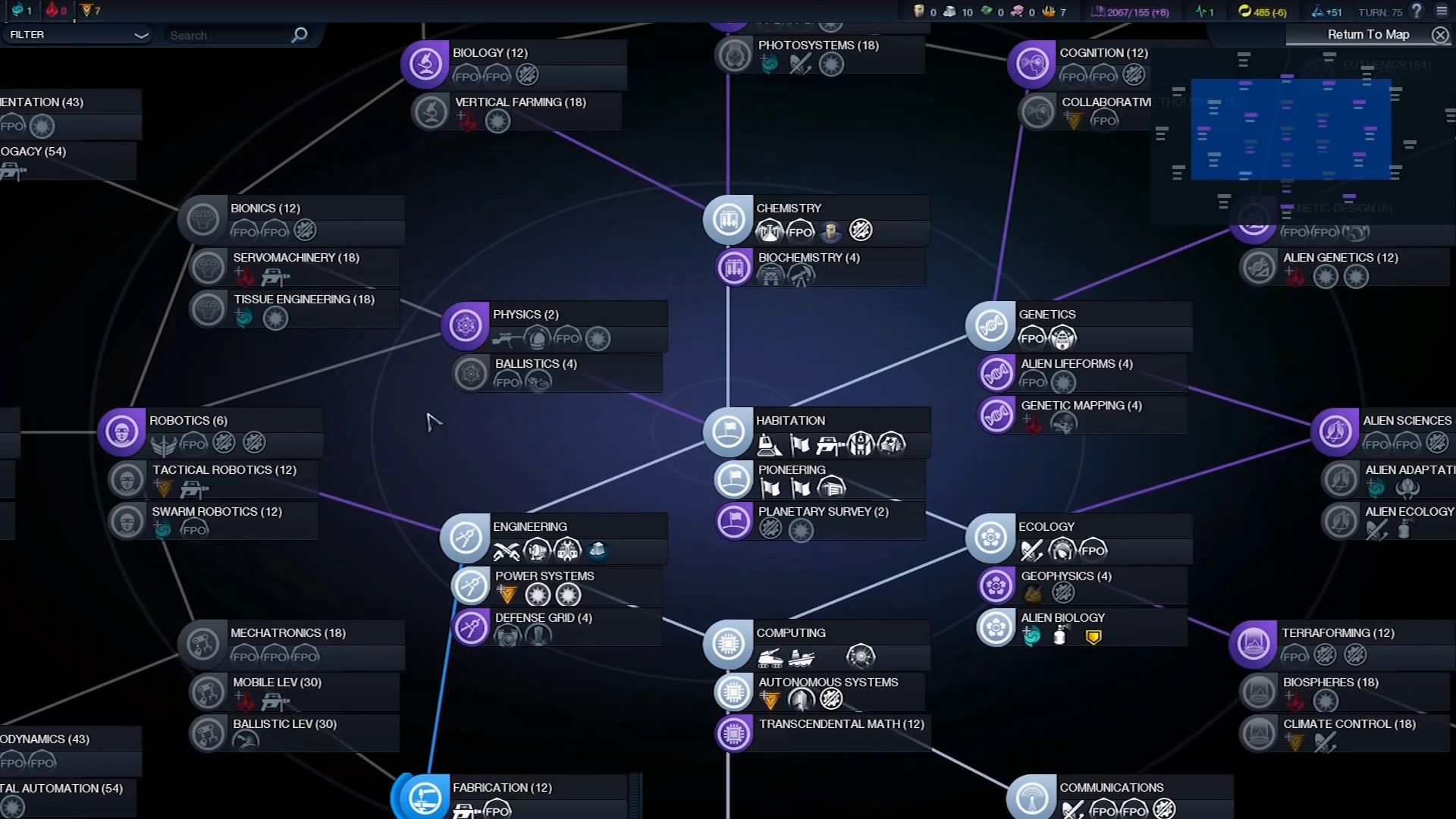
The technology trees were refreshing, however, as there was no longer a single path to a given tech but rather a web of paths. There is a steep downside, however, because most of the new technologies would have fallen under the category of "future tech" in previous iterations, the tech web becomes a mire of neologisms that isn't intriguing when considered from the historian's perspective. While this isn't purely a bad thing, it diminishes a part of the game which I, for one, deeply enjoyed. All in all, the depth provided by choices of affinity, virtue, and tech leaves the player with many ways of experiencing a single style of play; whether you like to play a diplomat, a warmonger, or a cultural phenom, you can do so in a variety of ways.


While the new virtue system led me to believe that city management would be emphasized, in actual fact it didn't seem all that important. Rather, the biggest new mechanic was the management of trade routes to and from individual cities. It was no longer a matter of a road connecting two civs, but instead of a worker-type unit carrying resources between individual cities both domestic and foreign. Due in part to my inexperience with the new game, building city improvements was largely a "build it and see" experience. I knew that I wanted buildings which increased my civ's health, but the difference between building an aqueduct and a cytonursery is a matter of fact versus fiction. This was one of many instances where the lack of concrete imagery and history diminished the experience I have come to enjoy and expect from a Civ game.

Overall, the gameplay in the new Civilization leaves me wanting something more. Turn processing takes too long, especially later in the game, and the game itself hasn't done much to invite new playstyles or refresh old ones. While things look a bit different at the end I'm left feeling like I haven't played a new game. All in all the changes and improvements don't amount to much more than I could have seen coming from  robust DLC or an expansion.


http://dispositiv.uni-bayreuth.de/wp-content/uploads/2014/10/Tec.jpg
Visual Effects/Art Style:
Even more than Civilization: Beyond Earth's gameplay reminded me of Civ5, the graphics felt exactly the same. I'm sure that side-by-side I could see some improvements, but there was nothing new in this game that made an impression graphically. With an entirely new planet to play with, that's a big disappointment. It's not that things aren't different, it's that they're the same. New units and new buildings have different skins, but operate and behave the same way. Combat looks a little smoother, but not in any ways that stand out. The maps themselves look and feel more dense than before, but the entire palette relies too heavily on green and blue leaving too little contrast and vibrancy for an exciting, alien world. This is even more true if the player chooses to follow the "harmony" affinity as I did, which makes units and some buildings take on this same overused color palette.


http://static.gamespot.com/uploads/original/949/9490474/2504221-3purity+marine_study+copy.jpg
Sound Effects/Music:
With the singular exception of the occasional audio clipping during loads, the soundtrack in Civilization: Beyond Earth is terrific. As I played, the music brought me to reminisce on Mass Effect, Halo, and even Jurassic Park. It created a wonderful ambience such that at times I preferred to listen rather than play the game.

Yet that's not the whole story. While the soundtrack is great, it often felt disconnected from what was going on in game. It was immutable whether I expanded, developed, or waged war. In times of peaceful trade and bloody warfare it didn't meld itself into the background of the experience and instead just hummed along over the top of everything. So, while I would absolutely recommend listening to the soundtrack on its own, there is no greater level of appreciation to be had from taking it in alongside the game.


The soundtrack is quite possibly the best part of the new game.

Story and Narrative:
In a game traditionally defined by the player's choices, story and narrative can vary wildly or not at all from game to game. In my games I often find myself considered a "warmonger" by the other civilizations by the time the game is ended, and I've come to embrace that. It's the way I choose to play the game and in Civilization: Beyond Earth I am given a variety of ways I can go about playing in that way. The variety of possibilities in the game is something to be applauded. It's not as simple as "this player plays like this and that player plays like that" because there are many ways of going about things and many ways of coming to the same conclusions. Pursuing different tech or different affinities can make the same essential story feel different.

Now while this is satisfying in theory, what is lacked is a significance to it all. Whether one wins by diplomacy or warfare, the story that one has told still has no characters and no setting. The alien planet and the post-earth civilizations have no historical basis. While I appreciate a good piece of science fiction at least as much as the next guy, there was an important aspect of the old Civilization games which came from seeing history interact in new ways. It was a sort of enlightenment to see how the course of a civilization might be shaped by its leaders and ideologies and Civilization: Beyond Earth seems to assume that fans of the franchise were ready to move beyond that rather than deeper into it.

http://cdn0.vox-cdn.com/assets/4773828/Human_hive.jpg
Entertainment Value:
So far I've spent about six hours with Civilization: Beyond Earth and I have invested $0 in it. Given what I have experienced I am satisfied to leave it at that.

While Civilization V changed gameplay elements and upset the way the game had been played for years, it was still the same experience at its core and that was the experience I was paying for when I bought a Civilization game. Civ5 wasn't my favorite iteration, but it was a true successor. Civilization: Beyond Earth feels like an entirely different game borrowing Civilization's gameplay (and, to a point, it's graphics as well). It's the odd cousin, the ugly duckling, the sore thumb, in a well beloved and long-running franchise. While it opens up the game to some very exciting ideas through the Steam Workshop and modding communities, the game alone is not worth the investment of time and money.

I hope that in a few months there will be another free weekend and that modders will have infringed on copyrights from games like Halo and Mass Effect, but I just don't have any desire to own the game by itself.


http://i2.wp.com/www.matchstickeyes.com/wp-content/uploads/2014/10/CivBE-Victory.jpg

Conclusion:
When I reached the end of my playthrough (about 150 turns later than expected) I was welcomed with a single pop-up congratulating me. Feeling like I had accomplished all that I desired to in the current game (again, about 150 turns before the actual end...), I chose to exit the game expecting a few pages of statistics and time-lapses. When I saw that I was in fact just being returned to the main menu I was disappointed and a little mad. It wasn't a big deal in previous games. It wasn't like I spent hours mulling over where and when I could have and should have expanded or attacked, it was just something nice to see--a reminder of where I had come from and where I had ended up. The end of a game in Civilization: Beyond Earth is like a song which has already gone on for too long missing the last beat. It's a sour way to wrap things up and doesn't appreciate the time and energy the player has spent playing the game.

More than anything the game is missing "final touches" that would make it look and feel polished. The units behave the same as they always have, the cities are just as static as they have always been, and the environment doesn't feel alien with the single exception of miasmic gas hanging over some tiles. If they really wanted to sell players on their new environment and mode, then more attention should have been paid to entertaining and delighting them rather than giving them what they were already accustomed to seeing. Civ5 took some major steps away from its predecessor in terms of gameplay and maybe Firaxis didn't want that kind of heat from its fans again, but Civilization: Beyond Earth already upsets so much of what was done in previous iterations that leaving much of anything the same doesn't serve the interested players.

Personally, I hope that the franchise returns to the historical fiction inspired gameplay of its roots, perhaps taking some of this newest game's improvements along the way. As of today, however, a new announcement has been made for the franchise:


Sid Meier's Starships looks like an "all-in" from the franchise on its new mode. While not explicitly a turn-based strategy game, Starships looks like an announcement which prophesies the direction that the franchise plans to take. This leads them away from the fans who have supported them in the past and into a new genre already mired with half-finished kickstarters and well-beloved indie titles. It's not that leaving your fans behind to do something new is a travesty on any level, it's just that it's a big investment to make into a genre which already has it's darlings.

Friday, September 19, 2014

Destiny: Does It Deliver?


Developed by Bungie and published by Activision, Destiny is the newest FPS making headlines. Touted as "an online, persistent world, first-person shooter", the game was released earlier this month on current- and last-gen consoles. As the "next big thing" from Bungie since they started the Halo franchise, Destiny has endured a lot of hype over the last few months.

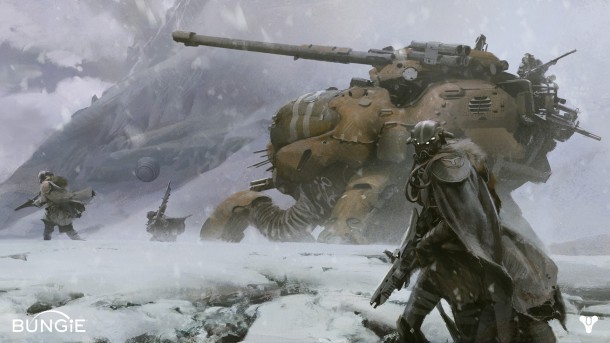
Having gotten my hands on the game first during the final beta test and now after the official launch, the game can be summed up as  Borderlands in a Halo-esque universe. Unlike Borderlands, the laughs are few and the tone is serious. Unlike Halo, loot grinding and exploration are core gameplay components.


What do they mean by "The ultimate adventure that unfolds over the next 10 years"? 
Let's hope they mean that the game will get better...
Gameplay: Destiny's gameplay is perhaps the greatest disappoint of the game if only because it was the biggest victim of the hype. The simplest way to describe Destiny is "Halo with loot". While that isn't an insult, it doesn't describe the sort of game that will define a console (much less a generation of gaming).

Destiny is not "the ultimate adventure" in many ways. Classes are limited to just three, and the difference between them amounts to a choice of super power. While the action is frenetic and fun, the levels and missions that the player is given are contrived and linear . While performing "impossible" tasks time and again, I actually suffered more deaths from falling off of cliffs than from actual gunfire.

Advancing and upgrading throughout the game is simply a matter of grinding experience points, which leaves a lot to be desired in the way of RPG elements. I figured that once Call of Duty eventually figured out that I should be able to allocate my progress where I want it to be the rest of the gaming world would be smart enough to follow suit, but Destiny is hardly so customizable. Traits are earned in a specific order and only after achieving certain levels. Not only does this vastly underserve lower level players who try to compete with higher level players in the PvP modes, it takes away the pleasure of connecting with your particular character if every Titan, every Hunter, and every Warlock level in exactly the same way. At the higher levels, when choices have been unlocked, there is a degree of choice in how you want to play, but tucking this away at higher levels is just unnecessary. Bungie said that 20 hours into Destiny you'll feel like you're playing a new game, and that's somewhat true, but the cost is keeping good parts out of the beginning of the game.

Loot is a major aspect of the game as well, but this, too, has its flaws. Finding chests and getting good drops are infrequent enough that when they do happen you get excited, but like any lottery you lose more often than you win. Most of what you find is more or less just a chance at getting a good item, and most of the time you come away a little disappointed. Unlike Borderlands, where loot was nearly constant if not always beneficial, Destiny gives you half the loot and a slim chance at any real reward.

Ultimately, Destiny is a mix of good and bad. Enemies don't overwhelm you and yet they still challenge you at points, which is good. The "sticky" targeting controls are friendly, but take away from the competitiveness some look for in an FPS. Maps and modes are well matched in PvP matches, but the player's levels make for such a disparity in ability that lower level characters just aren't welcome. Pick-up missions keep the leveling goal-oriented when the main story does not, but fail to impress the player and are solely used for grinding reputation points, money, and experience. In the end, Destiny's gameplay amounts to endless repetition and, as Nerdist says, it feels "spiritless".

http://static1.gamespot.com/uploads/original/78/787590/2517088-ci78003168030368170.jpg


Visual Effects / Art Style: Visually, Destiny is immediately reminiscent of Borderlands and I felt the influence of Bungie's last few Halo games as well. So, simply put, nothing you wouldn't expect artistically. While there isn't anything wrong with doing what works, there are a number of vistas in the game which are quite striking, but then turning back to face your mission becomes a bit of a bummer.

For the first ten levels or so there is little to differentiate new enemies from old enemies, and that underwhelming feeling bleeds into the later levels when the biggest difference is whether the critical point is the head or the belly. Every enemy race has fodder, bigger fodder, shieldies, and heavies all of which move, hide, fight and die alike. Moreover, set piece environments and retraversing old ground serve to shrink the environments and bring the player to boredom more quickly than they should. Seeing the same cave three times turns what should be a planet into a sandbox--and an unimaginative one at that. While this lightens the load for level designers on the production side, it costs the game its potential to immerse every player deeper into the game's universe.

And as long as I'm on the subject of aesthetics, my experience with piecing armor together has been far from satisfying. When granted to good fortune to upgrade a piece of armor, more often than not that upgrade is a different color or style from my various other pieces of armor. As a result, the players armor is seldom uniform and (at least in my case) the character ends up as mismatched as a birthday clown from Craigslist. With color being the primary aesthetic difference between pieces and dye items unavailable until later on, there is little in the way of satisfaction throughout the first fifteen to twenty hours of Destiny.


Sound Effects / Music: Happily, the sounds in Destiny are a brighter spot. Through some levels, ambient environment sounds feels out of place and become repetitive after just a short time, yet these tend not to be obtrusive or detrimental in any significant way. This can be said of the gunfire or the reloading sound effects as well, but less so as both of those come with the distraction of action. And, in any case, the upsides here outweigh the downsides.

The game's music is great. It's evocative and effective, though certainly not ground-breaking. The game's soundtrack is recognizable on the whole, and even though I would be hard-pressed to match certain music with certain game sequences, it does carry a uniqueness that allows the music to be identified immediately with the game. There are flashes of Halo's influence here as well, with chanting and bass drums, but they are too much mixed together for my taste. Gregorian chant has an eerie sense of isolation that was so fitting for playing as the Master Chief in Halo that I could see it fitting my Guardian as well (after all, the characters are virtually identical, but more on that later). As it is, the chanting comes with too much accompaniment and the accompaniment with too much chanting, but, all in all, I was very pleased with this aspect of the game.

The glaring issue with the games sounds is the complete absences of voices. There is no voice chat. Not in PvP. Not in the quest hub. Not in proximity to other players. Nothing. It's utterly, rampantly, infuriatingly, foolish. I don't care if they are pre-teens spouting inflammatory gibberish, at least they would make the world feel alive. As it is, the only way to communicate with other players is to do so through Xbox Live's party chat, and it's just unacceptable. This alone prevents Destiny from being a place to make friends. It restricts it to a game for you and the friends you already have, which is a major problem as it is also a game that is only worth sticking to if you have friends around you.

http://www.gamengadgets.com/wp-content/uploads/2014/08/destiny-beta-character-classes.jpg

Story and Narrative: If you check out other reviews, they probably describe the story as "shit" or simply "not good". Let me try to do a better job of explaining the nature of the problems.

The story lacks substance in the same way that Halo once did, and that's a reason to be hopeful. At the moment, however, the game lacks a strong main character. In part, this is a hazard of the various options given to the player at the start, but on the other hand this is exactly the sort of issue that game designers should be solving. Mass Effect, for example, balanced providing the player choices while still telling a character driven story, so Destiny comes in well under that bar. Most characters are never even given real names. Everyone is known simply by a cryptic title: Guardian, Speaker, Stranger, Gunsmith, Cryptarch, etc. This leaves you feeling disengaged from a personal connection with anyone and makes everyone feel distant. Something as simple as a name is a first step toward knowing a character, but when even that is kept away the player is never invited to care for the characters in the game. Couple this with repetitive appeasement of seemingly menial tasks assigned by your "Ghost" (think, Na'Vi from Ocarina of Time) and there just isn't a story that engages you and draws you into the world.

This lack of story building elements extends into the PvP element. With no reward for a Guardian that performs well relative to one who does not, there is no sense of accomplishment. With only a thin explanation as to why these exercises are even being conducted, the PvP matches feel disconnected from the rest of the world. While this is advantageous as a way of stepping back from the story missions, it means that half of the game contributes nothing to the overall story.

Bungie promised an MMO-length game, but the gameplay and story don't comprise something worth that amount of commitment. The background narrative is passe, Light versus Dark, and the actions of the player are soon erased by short respawn timers. All in all, what story is made available is not made exigent, and so most gamers are left wondering why they should bother to listen to the story at all when they can just follow their objective indicator and clear the waves until they level up.

http://operationrainfall.com/wp-content/uploads/2013/02/Bungie-Destiny-Leak_11-27-610x343.jpeg


Entertainment Value: For a AAA title, Destiny falls short of providing the player with the experience that it should. The best chance that the game has for being worth its cost is the promise of future support, and since that means waiting for the game to get good you might as well wait for the game to get cheaper. There is just too much missing at this point, most importantly the lack of social mechanics. If you've got a few friends who want to play with you then the game is well worth the cost, but as a single player the story isn't strong enough and the game does nothing to help you make friends.

The PvP is the stronger part of the game overall, but what you'll encounter there is mostly the standard fair that you could get anywhere else. King of the Hill, Deathmatch, and Free-For-All are studded with the occasional, "special" Capture gametype, but there's nothing "special" about any of them. While PvP makes a distinct and refreshing break from the single player mode, the disconnection between them will leave some players only really wanting half of the game. Matchmaking does a poor job of matching players with similar levels, gear, or attitudes, leaving every match dominated by those who have unlocked more high-level skills.

But far and away the greatest detriment to entertainment in Destiny is the loading times.They are incessant, interminable, and before very long you know you will be loading again. Mass Effect gave you snippets of conversation, Skyrim let you fiddle with game objects, but Destiny makes you watch the same lame videos over and over again. There was little to no thought put into this aspect of the game, which comes as a huge disappointment considering how much time is spent with them.  One can only hope that current-gen consoles have an easier time of it, but in any case it is a seemingly minor issue that makes the game a whole lot less fun to play and should be addressed sooner than later.

Conclusion: Destiny is not a game to play for a single player experience. It is a relatively long grind up to the top tiers of level and gear, and only from there can the PvP experience can be a satisfying one. Destiny is a game to play with your friends, and not a game to play to make friends. It is a game to enjoy for the thrill of the gameplay, and not a game to play for a compelling story. What the future holds for the game as DLC is rolled out I cannot say, but there are some glaring issues which Bungie and Activision would do well to repair before they try selling more of the same thing.

I've been very critical throughout this review, but in the end I still enjoy playing the game because it's the sort of game I like to play. Let me put this very simply: Destiny is Halo with loot. If you read that as criticism, this isn't a game for you to play. If you read that as interesting, though, and you think loot is just what Halo has been lacking all these years, Destiny is absolutely worth playing (just bring along a friend or two).
http://www.quickmeme.com/img/1a/1a82476a261fcfeb732ad5170b7ae3ba15918e6094a53731408fa1049e105658.jpg

Tuesday, March 25, 2014

Smite's Official Release!


Today, Smite is officially out of its beta testing phase! This game is one which I have posted about multiple times in the past, and a game which I play almost every day. Most of the changes the game has seen over the last few months have brought it closer to a League of Legends clone, and yet, while that's not typically a compliment, I believe it has helped guide this game. Even their new cinematic teaser (below) is reminiscent of LoL's trailers in style and mood.


Recent changes to the item store in particular have made this game feel even more like League of Legends. LoL's popularity has been growing and the realm of e-sports has been growing around it, so hitching their wagon to LoL's train isn't a bad strategy. Still, it is becoming more difficult to describe Smite in its own terms. If the abilities become known by their LoL counterpart, and gods which should feel unique become amalgamations of LoL's champions (who are themselves amalgamations of DotA characters), then it becomes difficult to bring new players into the game--something I dearly hope for.


They're newest addition to their roster of gods, Ullr, doesn't add much to the game creatively. While I'm interested to explore his strengths and weaknesses, I would hope that future god releases include characters with a little more imagination in their abilities. It does compensate, somewhat, that his skin, "Strider", makes reference to  J.R.R. Tolkien's "The Lord of the Rings", but I would prefer that the skin itself was more than just a change of color. The other skin they added recently, Dark Lord Sun Wukong, is clearly "inspired" by Star Wars, and if they're willing to run the risk of copyright infringement, why not an Assassin's Creed "inspired" skin for Ullr?

Now, before Hi-Rez has a chance to make major changes to their game again, I would like to share a quick gameplay video I recorded a few days ago. This match was over after only about 10 minutes, but most matches are between 15 and 25. The gametype is Assault (ARAM) and I play as Ra, a relatively basic god and one of the several available to new players for free. More than anything, though, my goal here was to give you some idea of what this game is like and, at the very least, this video can accomplish that.


If you haven't heard of Smite before or would like to give the game a try, check out it's page here


Friday, March 21, 2014

The Feel of the Game: War of the Roses vs. Chivalry: Medieval Warfare


Last night, I got to thinking about how "feeling" makes a game into what it is moreso than the mere facts of its description. To illustrate this, I present the examples of War of the Roses and Chivalry: Medieval Warfare. These are two games which look very similar on the outside, but feel quite different to the player playing them. While WotR feels rooted in history, Chivalry is really all about the action.

On it's Steam store page, Chivalry is described as "a fast-paced medieval first-person slasher with a focus on multiplayer battles" and it's most popular user-defined tags are "Medieval", "Multiplayer", "Action", "Melee" and "Gore".

User-defined tags for War of the Roses are very similar: "Action", "Free to Play", "Medieval", and "Multiplayer". But the game's description is less focused on describing the gameplay than it is on the historical aspects: "Battle online with up to 64 players through 7 historically inspired war zones as you experience the conflict between Lancaster & York first hand!"


But trying to describe their differences is inherently difficult. In both games you take on the role of a soldier. In both you choose between a variety of weapons, whether long-ranged or close, heavy or light. And in both games your ultimate goal is to slaughter the other team with superior skill and tactics. Getting more specific, both games ask the player to rely heavily on timing blocks and attacks, both try to inspire the player to see the match as a battle in a much larger war and world, and both use similar control and camera schemes. But the games become different as soon as you actually play them--once you actually feel them.

So, let me show you what I'm talking about.  Below are two videos of me playing each game. In Chivalry, there is a sense that buffoonery and ridiculous ideas have a place. It is more light-hearted than WotR, wherein a serious sense of historical accuracy is made dominant. Both games feature a wider variety of game types and weapons than I can demonstrate here, so my goal is to focus on what it is like to play an average match rather than explore the potential depth of the experiences.


What cannot be imparted through video or words is the way a game responds to the players inputs. This is an important part of the feel of a game, but short of putting the game in your hands it is not something I can show you. How well you are able to control a game makes a significant contribution to how you feel while playing it--are you in control or out of control?

What you are able to see in these videos is how pace and style develop the atmosphere, community, and sensations of these games. While WotR is slow and serious, Chivalry is fast and frenetic, and yet both games are trying to accomplish the same thing--an enjoyable, medieval experience.

In parting, I would be remiss not to mention "War of the Vikings", the next game from Fatshark and spiritual successor to WotR. I had a chance to play the game in its alpha-stage and, while avoiding saying anything specific, the game does a better job of accomplishing what it sets out to do. It has more in common with Chivalry in ways that don't make it unlike WotR and I feel that it will represent a step forward.

Wednesday, February 19, 2014

Loadout


Loadout is a new free-to-play, over-the-top, third-person action shooter. In addition to being a magnet for compound adjectives, Loadout is being touted on the virtues of its in-game customizablity. The game's developers, a company called Edge of Reality, have been in the game industry for over a decade, but this game isn't like most of the work they have done in the past.

Gameplay: Loadout doesn't innovate. You've played it's gametypes, you've fired it's weapons, and you've traversed it's maps. If I was going to forgive that, I'd say so about now, but I'm not. The biggest problem with Loadout is that it fails to stand out and try new ideas. When I think about the gameplay I'm reminded of another F2P game from last year called Renaissance Heroes that closed down last December. The games had a lot in common in terms of how they feel to play, and that was enough to keep me entertained for at least a few weeks. What sank Renaissance Heroes, in my opinion, was the exorbitant costs of the "micro" transactions. Loadout shouldn't have this same problem, but the fact remains that the gameplay has been tried and has failed.


If the customization options were truly deep, or if there was really much of an option at all, there would be more to say for this game. While the options are there for higher level or premium players, for most the game doesn't live up to its promise. Between a tech tree for new weapon options and experience points to spend upgrading and customizing your loadouts, the game has a capacity for depth that isn't realized until days and hours have already been sunk into playing it. The customization options should bemore readily accessible to new players if that's what this game is going to seel itself on. Without something special, without something to tell your friends about, Loadout doesn't stand a chance against the superior gameplay of its competitors. 7/10

Graphics: The graphical style of the game (reminiscent of Borderlands' "concept art style") is supposed contribute to that "over-the-top" sensation. Effectively, I've seen few players with the premium items and so much of the game looks repetitive. The maps are nice, but nothing special, and, while the projectiles are okay, the explosions don't make much of a visual impact. The animations are good and the way that damage shows on your character is downright admirable--easily one of the best parts of the game. 7/10


Sound: Loadout doesn't fail to utilize sound, but it does fall short of gaining anything form it. The clips of music and the beeping response you hear when you get a hit are effective at giving feedback, but they fail to add much to the experience. Sound hasn't been ignored in this game, but it has again failed to innovate in any way. 7/10

Value: As a free-to-play game, value is usually an easy win. Something for nothing is always worth it, and in Loadout you won't be overwhelmed by pay-to-win players (there just aren't very many of them). The premium currency reasonably priced, unlike it was in Renaissance Heroes, the F2P game I mentioned above, where a new weapon cost around $20. Moreover, daily rewards offer a chance at unlocking some of those premium items for free which is great. 8/10


Playing Time: Daily rewards area  great way to get players into a game day after day, but once you've gotten it there is little reason to stick around. For me, Loadout is a game I'll play for two or three matches (fifteen or twenty minutes) before I move on to something I enjoy more. I play a couple of matches, spend my experience, and move on. This is a game I'll play for a few weeks, and when I find something else I'll move on. While a game like SolForge has kept me playing with it's dailies, Loadout doesn't lend itself to quick sessions quite as well. All in all, I'll be done with this game before I really get a chance to enjoy it's customization options. 5/10

Overall: I'm not impressed with Loadout. The game is fun, but lacks anything to keep me hooked or to tell my friends about. There are no cool gimmicks or refined systems. It is too easily put down and too easily forgotten. I'm disappointed that I didn't have more customization options available to me at the start, and I feel that to be the first and foremost failure of the game. 68/100 F

Tuesday, January 28, 2014

Papers, Please!


I first heard about Papers, Please! over the holidays. It's a puzzle game developed by Lucas Pope wherein the player is an immigration officer for the fictional country of Arstotzka. Since it went on sale, I decided to pick up a copy and try it out. I was expecting something a little prettier, but I'm not dissatisfied with what I got.

Gameplay: As an immigration officer for the nation of Arstotzka, the player's task is to check that the documents provided by NPC's are correct and match one another. Rules change day-to-day based on various conditions relating to the game's story, like whether certain documents are required for certain reasons and how problems should be processed. Overall, this makes the gameplay feel much like working. What alleviates this to some degree is the story. Throughout the course of a day, certain NPC's may offer you choices or there may be a terrorist attack of some kind. These tend to have repercussions on the coming days but also on how well you are able to feed and care for your four family members. 8/10


Graphics: Papers, Please looks like a game from the 80's. That said, if this game had been made in the 80's we would still be talking about it today, though not because of the graphics. Playing the game reminded me of playing Oregon Trail in grade school as much because of the graphical style as for the game's layout. Much of the action happens in the top-left part of the screen, with the rest being reserved for the player to manage their decisions and review documents. Moreover, the graphical style being reminiscent of the 1980's, as well as the fact that Arstotzka is a communist state,  introduces it as a sort of discourse on Cold War politics. 7/10

Sound: Sound is an area where Papers, Please really succeeds. From the menu screen through to every click you make in-game, Papers, Please responds with sound effects that are more than auditory cues. Sure, they get repetitive, but repetition is a part of the nature of the gameplay and so it deepens the aesthetic feel of the game.The words are unintelligible, but the false language of them lends the game a sense of exoticism important to the overall aesthetic. 8/10

Playing Time: The amount of time you will spend playing this game is less than you would hope. Because of the tendency of the gameplay itself to feel like work, it's very easy to quit after fifteen minutes or twenty minutes. When this is the case, a game ought to be easy to come back to and Papers, Please does succeed in this. Your progress it autosaved at the beginning of each day, so you are free to quit out whenever you please or when your day is not going so well. This is not a marathon game, but it is a game to keep around to play little by little. 5/10

Value: Papers, Please is one of those games where the aesthetics employed make it a work of art as much as a computer game. There are a number of paths  might choose to follow in the game, helping a resistance movement, helping immigrants in need, or just helping oneself to make ends meet. In every case, there are moral issues to wrestle with and subtle discrepancies to inspect that engage the player in his role. For it's regular price, $9.99, one should already have an interest in Cold War politics in order to find that value, but on sale for half that price the game is entertaining enough for anyone. 6/10

Overall: I like this game, and would recommend it if you can get it for five dollars or less. There's no hurry to play it, but the next time Steam puts it up on sale it will be worth picking up. It is interesting conceptually, but the gameplay itself lacks entertainment value. Grade: 74 D 

Friday, January 24, 2014

Robocraft


A friend of mine recently suggested I try Robocraft. It is a free-to-play game that's been in development for about a year by FreeJam, a small developer from the UK. Robocraft's tagline, "Build. Drive. Fight.", encapsulates the basics of a game which appeals to both our creative and destructive appetites.

Gameplay: Robocraft is somewhere between Minecraft, Kerbal Space Program, and World of Tanks. More than this, however, playing the game is reminiscent of playing with Legos--except I get to blow up the other kids with lasers. While blocks are the primary building tool, like in Minecraft, the game has more in common with Kerbal Space Program. You build, you test, experiment, test some more, and eventually you find that an hour has past. The game is weakest when you are actually joining matches and fighting, though even that is not unpleasant. Steering is frustrating at times, but the fighting is good fun. It requires a bit of technique to line up shots and to keep your cannons on your target. In short, Robocraft is good fun whether building or fighting, while driving still needs some work.


Graphics: Robocraft isn't going to wow you with it's textures. The crafts are made from square or angular bricks that don't allow for smooth, rounded creations. The environment doesn't sport an amazing pixel count either, but manages an enjoyable, retro feel nonetheless. Laser beams and explosions are no better or worse than you'd expect given the quality of everything else--satisfying but not impressive.

Sound: In spite of the many ways that Robocraft succeeds, the sound design leaves something to be desired. The background music adds little and the sound effects fall short of satisfying. In a game which features both lasers and explosions, sounds are an area which deserve to see some improvement. Too often, sound gets ignored when it ha the potential to make up half of the experience  and that is the case in Robocraft so far. There is nothing to inspire feeling from the game's sound effects beyond simple confirmation of a kill. I would rather be hearing too many ratchets and gears than not enough.

Playing Time: Downloading Robocraft was pleasantly fast. It was less than 10 minutes between visiting the game's website and creating an account (which was also very easy to do through the game's launcher). My time in game has been split between crafting ships and taking them into matches. I've spent more time fiddling with my crafts than fighting with them, but that's been a lot of the fun. Games tend to go by quickly as you are returned to the "garage" as soon as your craft is defeated. Presently, there is no party mechanic or friends list available which is a limitation to the time I spend playing the game both in a given session and overall. So far I've enjoyed the game for a few days, but without friends list support I expect it will be uninstalled after another week or two.

Value: The game is free to play right now and is in an early alpha stage of development. Given that, the value I see in this game at present is tremendous. It's satisfying on a juvenile, intellectual, and competitive level all at the same time between it's gameplay, physics, and nostalgic feeling. Furthermore, the in-game currency available for purchase isn't expensive. I've played many games where eight or more dollars gets you one, maybe two, upgrades of one kind or another but the currency here is more reasonable. Not so reasonable that I've bought any, but cheap enough that I've considered it. In any beta (much less an alpha) that's impressive and a good sign that the developers have got their heads on straight.

Overall: As this game is still only in an alpha stage of development, I will refrain from assigning an overall verdict. I am hopeful that this promising game will continue to grow and improve itself. Without a doubt it's worth a quick download and a bit of your time.