Tuesday, August 19, 2014

EA's Bad Business

http://web-vassets.ea.com/Assets/Resources/Image/EA_grey_logo_banner_news.jpg?cb=1379511722
One of the first steps in understanding the gaming industry is knowing the players. I remember when I first began to recognize certain developers as sure signs of a game's quality, and, in part, it has been through the development of that knowledge that my understanding of the industry has grown.

Electronic Arts is one of the best known and most vilified publishers making games today. Within the gaming industry and the gaming community there is no company which is regarded with greater scorn and outrage. And yet, in spite of being named "Worst Company in America" by The Consumerist in 2012, Electronic Arts has not found itself being pushed out of the market by conscientious consumers. In fact, they have continued to grow into one of the industry's largest publishers.

http://upload.wikimedia.org/wikipedia/en/thumb/e/eb/Electronic_Arts_historical_logo.svg/1280px-Electronic_Arts_historical_logo.svg.png
I find  myself to be one of those disgruntled by their business practices. Rather than elude to that displeasure with snarky gibes, I will directly rant about some of what I find unappealing.

When I say that customer service is not a focus of the company, I do not mean to point at anecdotal evidence posted anonymously to web forums. What I do mean is that the company is clearly more focused on pleasing their investors than their customers. I am a firm believer in good customer service. It is important that business be conducted between people and that those people feel a personal obligation to be good to one another. The best business decision is often not the best human decision, but gains in social well-being have a better kind of value than simple profit. EA's propensity to think with their wallet has, time and again, raised the ire of the gaming community.

Take their recent release, Titanfall, for example. The game was sold for top dollar and, meanwhile, EA tried to snag $20 dollars more of pure profit by offering a "Digital Deluxe Edition" which included a "Season Pass" to future and, as yet, unannounced downloadable content packages. This meant, essentially, paying EA more money in order to receive absolutely nothing of value in return. Anyone who has stayed awake in a basic accounting class has an understanding of the time-value of money, but let me explain it quickly here. The time-value of money is the basic principle to explain why $20 today is worth more than $20 dollars a year from now. In short, it's better to have money right now than it is to have money at some future time. By selling something they haven't made yet, EA can cash in on quick profits and then squeeze the most value-for-dollar out of the deal while the consumer is left without recourse. To make matters worse, the "digital" part of the "Digital Deluxe Edition" means that there is no physical hardware to produce or ship, they merely lend you the pleasure of downloading the software from their servers at the cost of just fractions of a penny.

http://eaassets-a.akamaihd.net/prod.titanfall.com/sites/default/files/ddx-image-cepage.jpg?v=1100rc7

Now, as an investor, if you see a company selling a product for top dollar plus a premium while only spending a few cents to take that product to market, you see a pretty savvy investment. The fact that EA has the wealth to run large-scale advertising campaigns means that, when paired with a great developer, they can bring a pretty good game to massive popularity. And when you've done your research and found out that that company sells millions and millions of copies of its product, well, let's just say you go shopping for a bigger wallet.  As a consumer, on the other hand, you see yourself being treated like a child's piggy bank--heartlessly smashed and taken for every last cent you own.

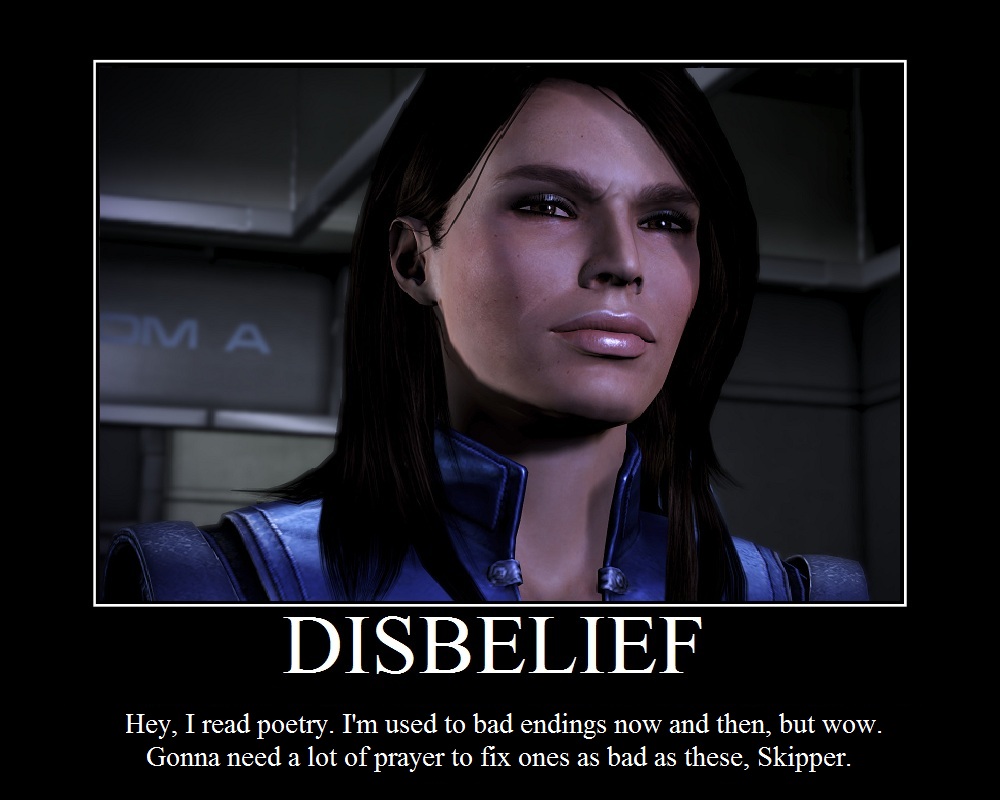
But EA have found even more devious ways to hide fees and charges in their products. They take parts of the game and hide them behind paywalls and in pre-order exclusives. Look at Star Wars: The Old Republic, if you'd like an example. The myriad ways in which the game is locked down for those "free-to-players" to whom the game is advertised is frankly astonishing. I have found myself disgusted on multiple occasions by the nooks and crannies which the game gouges the player for (or, rather, the payer). On the one hand, if you are a subscriber to SWTOR, the game is brilliant. On the other hand, if you want to try the game before you buy into it, you'll leave with only a taste of what could have been. It has created a lose-lose scenario where there needn't be one; the player loses out on what truly could be an immersive, exciting experience, and the game makers lose out on a possible subscription. And if you're still not convinced, look at Mass Effect 3. An entire character is missing from the game for those not willing to cough up their cash early--and he's one of the most interesting characters you'll encounter across the three titles (currently) in the franchise.

http://www.technologytell.com/gaming/files/2012/01/prothean-art-of-mass-effect-universe.jpg

EA is beholden to their shareholders before their customers. They make decisions on that line even when it means pushing a product into the market before it is ready and in spite of the desires of the artists crafting that product. They take the art away from their artists. They change the development goals to suit their marketing strategies.  EA acquires intellectual property assets and makes drastic changes, betraying the desires of the fans. Regardless, it is these fans to whom the title will be marketed and EA reaps the benefit of their highly desirable word-of-mouth advertising. They restrict digital transactions through their PC game platform, Origin, which has been found to have dubious tracking software that surveys the user's online activity. And one more thing, they don't make single player games anymore--everything is online, everything is multiplayer, and nothing feels connected to the innovation and experimentation that has brought the gaming industry to where it is today.

And yet, in spite of all of this, I do not completely hate the company. In an industry which is growing as fast as the gaming industry has been, and within worlds of "good guys" and "bad guys", there will always be a villain. There will always be something, somewhere, cashing in on the growth for all that it's worth. EA, for all their indecent practices, is a legitimizing force in the gaming industry. Pushing sequel after sequel, unoriginal idea after unoriginal idea, puts games on the same plane as Hollywood movies. It means the market is not starving, is not shrinking, and is impossible to ignore. It puts controllers in the hands of the young and the old alike and, whatever their opinion, it makes them acknowledge the medium--and that means legitimacy, which is something mere dollars cannot buy.

So, the moral of the story is this. Let EA make games for everyone else. Let them sell Mom and Dad on the latest VR system. Let them rot the brains of the young with flashy images. Let them be the villain, and while they are busy raking in their money, keep your eyes open for the heroes. Focus the power of your own entertainment budget on the companies, games, and most of all on the people who deserve it. It isn't easy, finding games worth your time and money, but that's why I make these posts. That's what this blog is here for--to bring you the games you won't find on your own, that you won't see advertised on television or in ads of Facebook. I'm looking for the diamonds in the rough, and if you are, too, then I'm sure we can find something worth putting the power of our dollars behind.

https://blogger.googleusercontent.com/img/b/R29vZ2xl/AVvXsEjE9emfue_OA8MjvRC-YNjB4C0k020KSDBsTmNfNlRWCzaCaN4HrDfxtOHeXiR6FwAmA_uhNkV0YSI7fcAcTCF7M4DKGBWdeGk4jGQwcScw5q6Jz5ufYJ2oWBMWlWL_bO0u98C63Z9mVSA/s1600/232_endrant.gif


Tuesday, August 12, 2014

Smite Gameplay

It's been too long since my last post, so here's a gameplay video I made last night.


I didn't talk much during this game in spite of being in chat with a few friends. It all seemed to work out pretty well, though. My team was able to find my heals and I was assisted well enough to escape from many tough situations. Maybe that was a bit of luck, but I think the other team was having some communication problems as well.

My favorite part of this game was actually the music that played. It's always nice to have a playlist you've made seem to work, but in this match it seemed to match the frenetic pace of some parts and the quiet lulls in others.

I seem to have good games when I play Ra. His MP5 is strong enough that you don't need much more than a rank 1 mana heal and some cooldown reduction. He makes for a very fun god and a great choice for beginners--just remember, your #3 is a heal, not a damage move, so use it like one!

In other Smite-related news, Hi-Rez have announced the game for Xbox One. My hope is that the added publicity and (hopefully) marketing budgets can bring the game to a wider audience.

I'll be back with another post soon.

Friday, June 27, 2014

Post E3 Rant


It's been awhile since I made a post, so here's a short one about E3 and what I've been playing these past few weeks.

Even after E3, I haven't found something new to be really excited about. That isn't to say that there weren't plenty of new announcements, nor is it to say that I won't want those games more when more information on them is available, but the sheer number of new games that are sequels in established franchises is what gets to me: Assassin's Creed 5, Batman Arkham Knight Borderlands the Pre-SequelCall of Duty: Advanced WarfareCivilization: Beyond EarthDragon Age: Inquisition (sound)Fable Legends (sound), Gears of War 4Halo 5The Legend of Zelda for Wii UMass Effect 4Starfox for Wii U, The Witcher 3. If you're a gamer with shallower pockets than you'd like, these are all games to wait for. Pre-ordering any of these (or, for that matter, believing any of their hype) is a mistake and is going to leave you disappointed. For now, let the critics sort them out and just forget about their (game-breaking) pre-order bonuses.
Now, Assassin's Creed is set up for reiteration and some others, like The Witcher 3 and Batman Arkham Knight, have only drawn upon a fraction of their total lore, but it is clear that many of these sequels are only being made for the security of their namesake. Both The Legend of Zelda and Starfox for Wii U are pointless entries in an already protracted catalogue, for example. Sure, many gamers are (inexplicably) excited for these new games, but I find it highly unlikely that those gamers are really interested to see anything new in them. Remember Starfox Adventures? The one where Fox isn't in his Arwing for most of it? It was awful. So while more of the same thing isn't always bad (like with pie!) it leaves me altogether nonplussed.

And then there are games like Mass Effect 4 and Halo 5. Both original trilogies have ended and it's as though no one learned anything from Star Wars. A new beginning is the answer to a good ending, but apparently the heads over at Electronic Arts and Microsoft won't let a good thing go when it's over. And from a business man's perspective, their sunk costs in advertising the previous games will make the public more receptive to their next marketing campaign--so, why shouldn't they? 

http://knowyourmeme.com/photos/271298-mass-effect-3-endings-reception


Because anything that climaxes has to then fall, which means things are wrapped up and the story should be ended. The story that Mass Effect promised to tell is over. The ending wasn't the best part, but that doesn't mean you can take it back and it doesn't mean that the story isn't over. All Bioware can do now is try to prolong the life of a dying franchise and hope that they can turn it into some kind of money-vomiting zombie like Call of Duty or the Sonic franchise. EA ought to let Mass Effect go and invest somewhere else, but I'm relatively certain that they won't. And, for that matter, Dragon Age didn't see much improvement the last time they made a sequel--so it's time for some new title all around.

And as for those poor souls at 343 Industries, I hope they've all come to terms with the fact that they'll be making Halo games until they quit, die, or more likely get fired. The sheer merchandising efforts poured onto Halo over the last few years is evident of a powerful company throwing its financial weight around: Books, Audiobooks, Action Figures, Animated Movies, Live-Action Movies, and Animated Movies That Look Like Live-Action Movies! The artists working on Halo have done wonders for growing the lore, but over the next decade or so that won't save the franchise from its doom. They can tell new stories until they're blue in the face, but they can't relight the fire that made Halo the exciting, new game franchise that it used to be. That means they are relegated to selling a simpler, less exciting product to an older, less exciting market.

If you can produce a game every 5 years for 30 years, then by the time you're done you'll have attracted the attention of at least one solid demographic. In theory, as that demographic ages, you can target your products to their age bracket and keep profiting. In reality, me at 5 years old was interested in entirely different games than I was at 15, and I can't imagine myself at 15 is going to have much in common with myself at 30. That's the problem with franchises like these, we tire of them after awhile. Call of Duty and EA's sports franchises are great examples of just how quickly a franchise can become tired if you release annually, and, likewise, are good examples of how to survive in that afterlife. Mario, the patron saint of long-lasting game franchises, has found that the best way to remain relevant is to innovate the game itself while leaving the established story on the liminal edge. Smash Brothers, Mario Party, Mario Kart, Paper Mario, Mario Galaxy--they all focus the players attention on the innovation to the gameplay itself and away from a rather unimportant narrative. This will not work for a franchise wherein the narrative is meant to drive the gameplay i.e. Halo, Mass Effect, Dragon Age, Fable, Gears of Wars, etcetera).  Their best chances at reiteration come from their multiplayer aspects, but nothing can cure the fact that you can't leave the story out of a game about a story. Halo has been tried as an RTS title to little success, and BioWare shelved their own Mass Effect FPS project before anyone got a good look at it. Fable Legends looks poised to try and change its skin with its new 4v1 play-style and some pre-fabricated character classes, but I hold little hope for this one to do anything important in the land of Albion (I did sign up for the multiplayer beta on their website, though).

But let's not focus on just the negatives. I don't think all is lost for these franchises if they can change the way their DLC packs are perceived by the gaming public. With a few notable exceptions, most of the DLC that I've played in my life has been underwhelming (i.e. Horse Armor). But this needn't be so; I've felt for years that if EA, for example, should support their sports titles with roster updates even after the newest iterations were released for a nominal fee? I'm more willing to buy a game that I can continue to use for two or three years at a time--much more willing than I am to buy one full game every four or five years. The point I'm making is this: I'd rather buy good DLC for an older game like, say, Mass Effect 2 than another entry in that series sans Shepard. I would rather be the Master Chief again than some colony-world bumpkin who idolizes him. I would rather have the titles I'm invested in supported than be asked to buy a new one. Selling new games is important too, but those should be new games instead of the high resolution reiterations that the industry is seeing over and over again.

 The lesson here is this: Let a good story be over once it has been told. It's better to trust a game company to make good, new games than trust an old franchise to hold everyone's attention.
/rant

http://fanboygaming.com/a-fangirl-weekly-discussion-dlc-worth-buying/


As for what else has been going on these last few weeks, I still think Smite is a great game that is well-supported and worth your time, but Elder Scrolls Online has been having a tough time vying for my attention lately. My brother recently went back to playing Rift after being disappointed by WildStar and I dabbled a bit when he asked me if I wanted to play too. However, to my surprise I found myself wanting to go back to a different universe--a galaxy far, far away in SWTOR. What I found there was EA up to its old tricks--adding gambling to an already addictive genre of game in what I can only assume is some depraved, cash-mad sociology experiment. I did get a cool chestpiece out of the deal, though.

I'll elaborate more on why EA is evil in another rant in the near future, but I would like to take the chance to mention their recent summer sale, which was something I hadn't expected from them. Typically, EA only sells their games for top-dollar, but a few weeks ago they put many of their games on sale for around 50% off. I snagged Titanfall and a PC version of the original Mass Effect, both of which I have been enjoying a great deal. It was Titanfall on sale that really shocked me. It's their newest big game, though I guess they have mostly been pushing it for Xbox One. I'll share more of my thoughts on the full game in a future post. In any case, their sale was likely an attempt to grab a little attention before the slurry of internet chatter began to focus exclusively and reverently on the Steam Summer Sale (going on now!). All in all a smart move from EA  to license some digital rights and a welcome opportunity for me to get some games I've wanted at a price nearer to their real value.

And before I sign off I should mention the Steam Summer Sale at least one more time. It's pretty great and all, but this year I'm just not seeing many games that I really want to buy. Even the super-cheap indie ones either don't appeal to me or I already own them. Still, there are a few days left and it only takes one super deal to make all the time and attention I've payed worth it (because the trading cards certainly aren't doing it for me).

Wednesday, May 7, 2014

Space Engineers


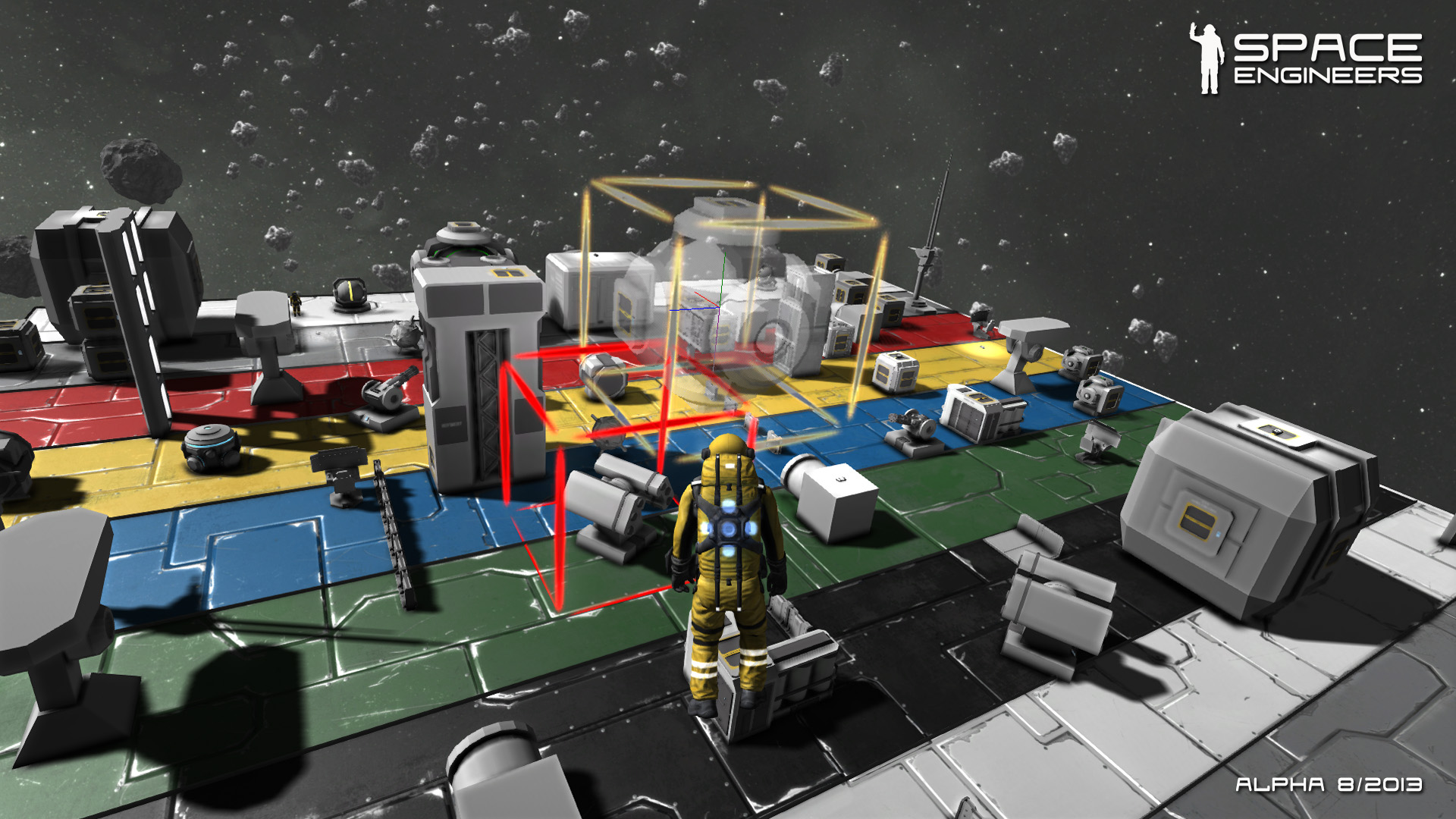
There's nothing wrong with loving space, so I'm going to follow up my post on Shattered Horizon with another on a game which I expected would be similar, Space Engineers. The game is still under development by Keen Software House, but is available for early access through Steam for the hefty sum of $19.99. Now, generally, such a price on something that isn't done yet would deter me, but after thoroughly enjoying the concept I found in Shattered Horizon, I was eager for a more satisfying game with the same "lost in space" feel to it. So, before doing any of the appropriate research, I bought Space Engineers. To say that I regret buying it and that the only good thing I'll be getting out of the game is this blog post might be too harsh so early on, but at the moment I'm a bit sensitive about getting someone's hopes up before they're utterly dashed.


And now that I've set your expectations as low as I can, let me expound on the good aspects of Space Engineers. It has multiplayer. You can swap between first- and third-person camera views. You can build things and then look at them. So, now that that is done...

The game manages to be reminiscent of Minecraft, Robocraft, Shattered Horizon, and Kerbal Space Program all at the same time. It refers to itself as a sandbox game about engineering, construction and maintenance, yet it is, in essence, merely game about blocks (at this stage in development). If you've played Minecraft in creative mode then you've played Space Engineers, except that this game is in space which apparently means you inevitably float away from whatever you are working on (Oh, and don't bump into things or those will float away, too!).

I do think there is a market for games like this one, but I am sure that I am not a part of that demographic. Minecraft is quite popular among some groups and to fans of that game I'd recommend taking a look at Space Engineers, but if you're like me then those games lose your interest astonishingly fast. Don't get me wrong, I like to build things, I used to play with Legos for hours, I found construction to be the best part of Robocraft, but this game feels aimless. The trouble is that I don't enjoy the building process. For one thing, it's infuriating just trying to stand still as you can never quite get your inertia back to zero. True, you can stand on a platform while you work for some stability, but then you move like an over-encumbered dragonborn. I understand that these things are part of a realistic space simulation, but Space Engineers is a block-building game (at the moment) that is only made more frustrating and less fun for all the realism in it. I'm supposed to be frolicking through my imagination, not struggling to get close (but not too close!) to the slab of bricks I built to take me back to the space station.


Still, Space Engineers isn't a game without hope, it's just a game that they shouldn't be selling yet. I'm hopeful for the engineering and maintenance aspects which I have yet to see added to the game, and I do believe there are gamers out there who would enjoy this game as it is more than I do. If Space Engineers can find that audience it stands a chance of entertaining some folks, but it would also be wise to avoid a more massive market unless the game has a good deal more to offer in regards to narrative and variety than is currently available.

Shattered Horizon


"Shattered Horizon" is a first-person zero-gravity space shooter by a Finnish software development company called Futuremark Studios. As a leading producer of computer benchmark software, one might expect that Futuremark's "Shattered Horizon" is a game designed for cutting-edge PCs but it seems that they've elected a safer, simpler approach to their game design.


Gameplay: The first hurdle the player faces in Shattered Horizon is the control scheme.  The game's tutorial consists of four images explaining the keybindings, the HUD, and the game modes, which altogether does little to prepare the player for the experience. It takes a game, maybe two, to adjust to the spinning and rotating which make this game special. Unfortunately, that is typically about as long as you'll be playing this game unless the number of players online picks up dramatically. Single player is simply a match versus bots and, since I have never seen another player playing online, the multiplayer mode is virtually identical. This might be related to the fact that there is no clear means of creating a multiplayer lobby. Beyond this, the game itself includes just five generic classes ranging from shotgunner to sniper.

The zero-gravity element, however, adds flavor to all of this blandness. Once you've learned to land, roll, lift-off, and boost the maps become playgrounds of skill and strategy. The first time I encountered an upside-down AI bot firing away I was convinced that the concept of this game was its strength. Not only is the zero-gravity element exciting and refreshing to a genre that is beyond stale at this point, it invites a gamer to imagine how awesome first-person zero-gravity games could be. The experience of this game is one that does not entirely serve the game because the best parts have nothing to do with the objectives. There is an undeniable joy and an immutable sense of freedom in jetpacking around structures in space which overshadows the combat-centric game modes. The fundamental flaw in Shattered Horizon is that winning the game asks the player to ignore the most enjoyable part of the game's experience--the atmosphere.

"There is an undeniable joy and an immutable sense of freedom in jetpacking around structures in space which overshadows the combat-centric game modes."
Visual Effects / Art Style: Shattered Horizon relies on the atmosphere it creates to deserve your playing time. To this end, it is important that the game's visuals serve both as interesting spectacles and entertaining battlegrounds. Satellites, shipping containers, and asteroids create an environment which is desolate, eerie and captivating. The cold silence of the final frontier can be felt best when the player deactivates their HUD (purportedly to make them harder to detect for enemy sensors) leaving them in the soundless vacuum of space. The environments themselves are highly satisfying and provide an engaging backdrop to the task at hand, but the backgrounds beyond are less adept at maintaining the ambiance as they tend to be mere star maps. As for the visual effects specifically, the HUD is hard to read and the maps are entirely static. It would be nice to have a chance to blow up a few things or start a fire here and there in order to make the environments a more engrossing place in which to play. As it is, the map textures are pleasing, but the game lacks a deeper attention to details.

"As it is, the map textures are pleasing, but the game lacks a deeper attention to details."
Sound Effects / Music: The most powerful sound in space is silence. The darkness is vast and bleak and the game should capitalize on the opportunity to make the player feel lonely. While deactivating the HUD and drifting near your team's spawnpoint demonstrates that Shattered Horizon is capable of this, the objectives and endless respawns of AI bots counter this effect a great deal. Given the space-faring concept of this game, it is subject to the principle of 'less is more',  and yet it seems the developers did not keep this well enough in mind. It's nice that deactivating the HUD gives the player that deep-space feeling, but the game's design makes this an unreasonable strategy. Between the gunfire and audio messages a great deal of the ambient satisfaction is lost, and that's a real shame in a game which has demonstrated that it is capable of it.

"Between the gunfire and audio messages a great deal of the ambient satisfaction is lost, and that's a real shame in a game which has demonstrated that it is capable of it."
Story and Narrative: I wish there was more to say here. The simple fact is that the majority of the story that Shattered Horizon provides comes in blurbs tucked away in loading screens. While long loads makes for ample time to peruse these tidbits, they do little more than explain the motives for each teams presence. The teams themselves aren't any different, so the games have nothing beyond a simple "red vs. blue" setup. I mentioned above that the game invites the player to imagine ways that the game's concept could be employed elsewhere, as in an FPS-RPG à la Mass Effect. In short, it feels like there is a lot of potential here that's being squandered by a tired game model.

Entertainment Value: There are a few things worth experiencing in Shattered Horizons. For one, there is the atmosphere that a zero-gravity first-person game creates. For another, there is the joy of exploring the space-scape, dodging behind asteroids and peeking over solar panels. And yet for all the promise held in the game's concept, the execution leaves much to be desired. They started with a great idea and they made that first idea work, but then they followed a formula for everything else. Couple that with empty multiplayer lobbies and you've got a dud on your hands. A pretty dud, mind you, but a waste of $9.99 all the same. If this were a F2P game, I'd say download it and experience the atmosphere, but instead you're better off waiting for a better developer to pick up the idea and do something worthwhile with it.

"...you're better off waiting for a bigger developer to pick up the idea and do something worthwhile with it."
Lastly, I've got a couple 3-day passes for the game. Leave a comment if you're interested!

Friday, April 18, 2014

New Post Format II

After some thought, I'd like to make a few tweaks to the way I focus my reviews. In some ways these changes take a new angle on the same essential ideas, while in other instances it will lead me to talk about games in more specific ways that I might have in the past. So, let's talk specifics:

Gameplay: Still my first category but no longer one I would consider "most important", Gameplay is where I'd like to discuss the way a player plays the game. This means the control schemes, the duration of play sessions, and how these things effect the "feel" of the experience. I intend to make this category shorter and more specific.

Visual Effects/Art Style: An adaptation of the "Graphics" category, Visual Effects and Art Style will still be about the visual experience of the game, but will include more specific discussions on the aesthetic qualities of particular facets of a game. I will focus on moving away from relative comparisons and into my thoughts on what the visual component adds to the game.

Sound Effects/Music: In my previous posts, I have found a tendency to emphasize the necessity of effective in-game sounds. I hope that bringing greater specificity to this review category will bring new insights into good game design and a better guide to how a game creates atmosphere.

Story and Narrative: To my chagrin, many of the games I pick up lack well-developed stories. This is a serious problem among free-to-play games (which I review most frequently) that typically sets them apart from bigger, triple-A titles, but rather than using this category to grind that axe, I hope to focus more on constructive criticisms pertaining to how a game's narrative could be further developed.

Entertainment Value: An adaptation of the "Value" category which also borrows from what was cut from the  old "Gameplay" category, Entertainment Value is where I'll discuss a game's value-for-dollar as well as the impact of the experience. Games cost time, money, and attention in order to provide an entertaining experience.

Previously, in the "Value" category, I had intended to discuss the artistic contribution a game made to the whole industry, but the nature of much of what I am able to review makes this largely unnecessary. I don't mean to say that F2P games don't contribute to the art of video games, but I have seldom found it to be a highly relevant factor to recommending a game. If a game has artistic merit, then I would expect that merit to make a contribution to the way a game entertains the player and it will still be considered in the "Entertainment Value" category.

The next post I have planned is about a game called Shattered Horizons. I will be giving this scheme its first run there, and also plan to include a gameplay video. Look forward to it!

Tuesday, April 8, 2014

ESO Launch and First Impressions

The Elder Scrolls Online officially launched on April 4th, but I've been playing since March 31st with 5-day early access. My initial impressions were positive: I saw a great many players roaming Tamriel with their pre-order bonus vanity pets and Imperial Horse mounts. Last minute changes to the starting zones were frustrating to some story-centric players, but as someone who participated in several beta tests I found the opportunity to skip ahead of much of what I had already experienced to be a pleasant surprise. All in all the launch for both the 5-day and the 3-day early access went very smoothly.

With the true launch of the game on April 4th, some new problems came up. While the game itself is far from bug-free, the bigger troubles came from policies and systems external to the game. With the end of the early access periods and the beginning of subscription-based play-time, players were required to use their 30-day pass (included with the game) as a sort of registration key before they were prompted to select a subscription plan. The failure or inability to do either of these things meant being locked out of the game. This frustrated players who wanted to use their 30 days before deciding whether to subscribe for longer, but more egregiously those who had not received their codes were left helpless. In response to this, a grace period for submitting the code was extended through part of Sunday.The problem was that deliveries aren't made on Sundays, so some players were unable to play the game until their codes were delivered on Monday. This is what happened to me and, as someone who paid for the Physical Imperial Edition (the expensive one), it was disappointing to not be treated as a valued customer.

But when I think about judging a game's launch, what is happening in the game is far more important. If I'm delayed a few hours for some server downtime or a day for a delivery to be made, I would still be more frustrated by the game itself not working for me. In that respect, bugs are still popping up in spite of the lengthy beta testing phase and relogging to fix small glitches is disruptive to the experience. If the Elder Scrolls universe was not one which I loved, I would feel more inclined to recommend it to MMO players. As it is now, I would say the game better serves Elder Scrolls fans as the atmosphere is true to the game's predecessors and knowledge of the world-lore adds depth in the world which is otherwise easily skipped over. It might be more effective if ESO served as a bridge for MMO players into the Elder Scrolls universe enabling the Elder Scrolls fandom to grow, but the opposite is true and I see ESO bringing Elder Scrolls fans towards the bewildering landscape that is MMO gaming in this Free-to-Play, Pay-to-Win era.

Speaking as an Elder Scrolls fan, what I want most from ESO is for it to bring on an expansion of the franchise, not just internally through the game's lore, but externally as well as the fandom grows and more people take notice and take an interest in the game.

To that end, I'm already finding amazing things. For example, ShoddyCast, a YouTube channel, has been publishing an Elder Scrolls Lore Series:


And there are a lot more things coming from ESO, like these gamplay walkthroughs from YouTube channel IFreeMZ:


In my opinion, though, one of the best things coming from ESO are these trailers from Bethesda Softworks themselves:


Overall, ESO's launch certainly hasn't been perfect, but they have avoided some of the bigger pitfalls that other games have fallen victim to (like entirely halting digital sales of the game, FFXIV). The game itself is satisfying to Elder Scrolls fans like myself, and as long as we keep talking about it the game's popularity is sure to grow. The game needs to continue to grow as well, in patching up its bugs and glitches and in providing players more and more story to delve into. We are adventurers, after all, and we're going to need a steady supply of mysterious dungeons, caves, and keeps to hold our interest.